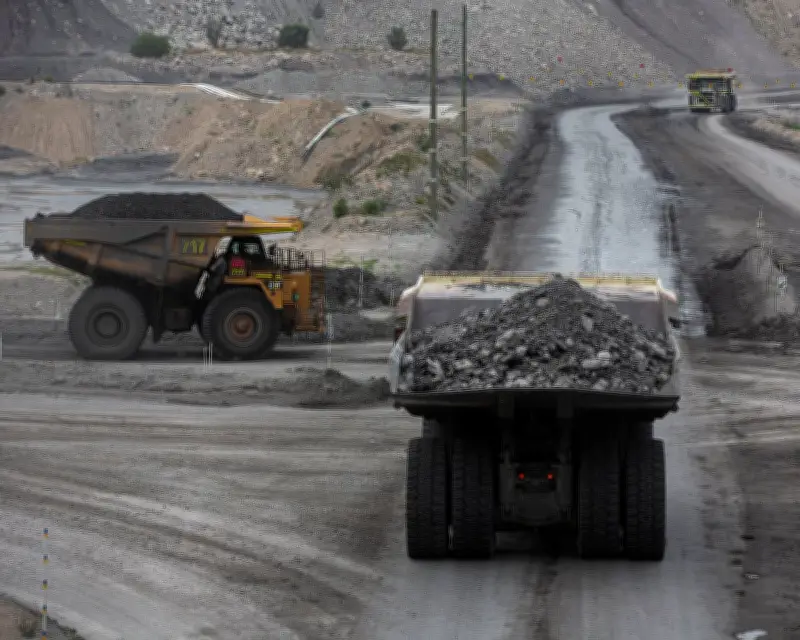
Coal companies could receive an extra $6.2 billion in taxpayer refunds for diesel if the Albanese government greenlights just half the mine developments currently under consideration, according to an analysis released by activist group Lock the Gate.
Growing pressure on fuel tax credit scheme
The finding comes as the government faces an internal campaign before next month's Labor party national conference to commit to winding back the fuel tax credit scheme for multinational miners. More than 300 Labor branches have joined unions, climate campaigners and mining billionaire Andrew Forrest in calling on the government to cap the scheme, which refunds miners, farmers and other industries the 52.6 cents per litre excise applied to petrol and diesel.
Treasury last month forecast the scheme would cost the budget $47 billion over the next four years, rising from $10.7 billion in 2026-27 to $12.8 billion in 2029-2030. More than $1 billion a year goes to coal mine operators alone.

Potential for billions in additional rebates
Energy & Resource Insights, a consultancy created by the Sunrise Project, a climate advocacy organisation, said another 45 coal mining developments were proposed in New South Wales and Queensland. Of these, 22 had environmental impact statements that outlined expected diesel consumption. Based on that data, the consultancy estimated coal companies could receive $6.2 billion in rebates on 11.6 billion litres of diesel used over their operational lives. It found one expansion alone – Glencore and Yancoal's Hunter Valley operations expansion, the largest coal project ever proposed in New South Wales – could reap $1.7 billion.
Criticism of the subsidy
Lock the Gate's acting national coordinator, Georgina Woods, said the fuel tax credits scheme was rewarding coal companies with billions of dollars for using diesel, reducing the incentive to shift to clean vehicles to cut emissions. She said it meant companies were “effectively claiming a public subsidy to expand coal mining” and the money would be “much better spent on easing the costs of climate change”.
“Households are struggling with rising energy bills and insurance costs, and that will worsen as the climate crisis escalates,” Woods said. “Pollution from mining and burning coal is fuelling rising disaster costs across each state and territory and the annual damage bills from increased flood, bushfire, storm, cyclone and hailstorms could reach over $40 billion in the next 25 years.”
Fuel tax credit scheme details
The fuel tax credit scheme is available to companies that use fuel in vehicles on private roads or in machinery. Households and most businesses usually pay the full excise, though it has been temporarily reduced for four months due to the war in the Middle East causing a jump in fuel prices. Mining vehicles consume about 35% of the diesel used in Australia, mostly to run trucks. About 15% of diesel is used at coal mines.
Supporters and opponents
The scheme's supporters argue the fuel excise is collected to fund public roads and should not be paid on diesel and petrol used elsewhere. The Minerals Council of Australia says the scheme stops businesses “from paying a tax they don’t owe” and is “critical to the competitiveness of a diverse range of regional businesses reliant on diesel including Australia's minerals industry, agriculture and tourism”.
Those calling for a change say the overwhelming majority of fuel excise revenue is collected as general budget revenue and not explicitly linked to road building and maintenance, and that the refunds encourage fossil fuel use. They say it undermines another policy – the safeguard mechanism – meant to encourage big industry to use cleaner technology to cut emissions.
Internal Labor party push
Almost 320 Labor branches have backed a push by the party's conservation arm, the Labor Environment Action Network (Lean), to cap the rebate at $50 million for each company – a model that would target big miners but exclude farmers and small businesses. Lean also wants to amend Labor's national policy platform to commit the government to remove all “disincentives for decarbonisation”.
Labor MP Jerome Laxale has publicly backed the campaign and Guardian Australia is aware of several of his colleagues who privately hold the same position.

Government stance
The government is holding firm for now, with the resources minister, Madeleine King, last month insisting that the existing regime would remain in place. “We're not considering any changes. We're simply not,” King told Sky News. The Albanese government has approved 15 coal developments, mostly mine expansions, since its election in 2022.