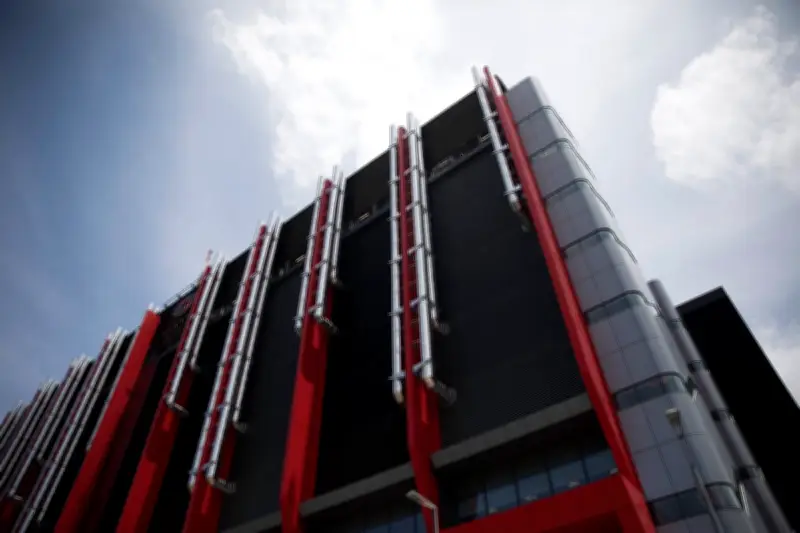
Australia is experiencing a significant datacentre boom, with approximately 160 facilities currently operating and another 90 proposed, according to the Climate Council. This surge is driven by the global demand for artificial intelligence and digital infrastructure, with an estimated $155 billion investment pipeline over the next decade. However, the rapid expansion has sparked debate among experts, policymakers, and communities about the environmental and economic implications.
Massive Projects Raise Concerns
One of the most ambitious projects is a proposed hyperscale datacentre on Mamre Road in Sydney's outer western suburbs. If approved, the 52-hectare site would include six four-storey buildings, 936 cooling units, and 852 diesel backup generators, making it one of the largest in the world. Once operational, it would become Australia's single biggest energy user, consuming more power than the Tomago aluminium smelter. This has led Penrith council to oppose the project, citing its immense energy and water demands.
Energy and Water Consumption
Datacentres already account for 2.8% of electricity consumption on Australia's east coast, a figure expected to rise to 7% by 2030 and exceed 10% by the mid-2030s, according to Alex Hooper, head of climate and energy economics at Oxford Economics Australia. The Climate Council warns that wholesale electricity prices could be 20% higher by 2035 if additional renewable energy sources are not developed to offset the demand. Water use is also a concern, as datacentres rely on evaporative cooling to prevent server overheating, requiring significant water resources and large tracts of land, often near urban areas.

Economic Benefits vs. Job Creation
While datacentres are crucial for the digital economy, they are not major job creators. Studies in the US show that construction phases employ thousands of workers, but operational phases require only hundreds. This has raised questions about the net benefit for Australia. Beth Webster, an economics professor at Melbourne University, is optimistic that Australia can avoid pitfalls seen overseas, such as insufficient energy and water provisions or poor siting. She notes that foreign direct investment from datacentres can foster knowledge exchange, provided there are appropriate regulations.
Pat Bustamante, a senior economist at Westpac, argues the boom is unequivocally good for the economy, laying the groundwork for productivity growth similar to the PC and IT revolution of the late 1990s. He expects that once high-speed computing power is in place, productivity gains will follow. However, Sally Auld, chief economist at NAB, highlights broader societal concerns about AI, questioning whether the technology will augment or replace jobs. Her research suggests augmentation is more likely, but the net effect remains uncertain.
Need for Strategic Policy
Experts emphasize the need for a coherent industrial policy to ensure datacentres benefit Australia rather than impose costs. Hooper states, “There are huge opportunities, but we need to be smart. There is some level of datacentre investment that is good for Australia. The question is: how much?” She calls for a vision of the future where the public sees tangible benefits from the infrastructure. As the boom continues, policymakers must balance economic growth with sustainability and community well-being.