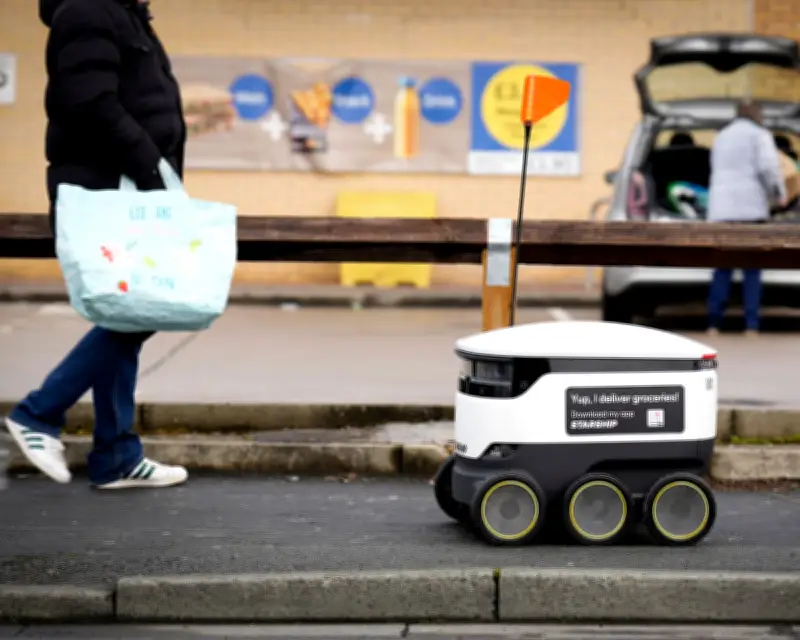
UK ministers are expected to back a legislative change that would permit delivery robots to operate on England's paths and pavements, according to government sources. The move is part of a broader push to embrace automation and reduce carbon emissions from last-mile deliveries.
What the Law Change Would Allow
The proposed amendment to the Highway Act 1835 would explicitly legalize the use of autonomous delivery robots on sidewalks, footpaths, and pedestrian areas. Currently, these robots are technically prohibited from using pavements, limiting their deployment to private land or roads, where they face safety and traffic concerns.
The change would apply to England only, with devolved administrations in Scotland, Wales, and Northern Ireland expected to consider similar measures separately. Robots would be restricted to a maximum speed of 10 mph (16 km/h) and would be required to yield to pedestrians, according to draft regulations seen by The Guardian.

Industry and Environmental Impact
Delivery robots, already trialed by companies like Starship Technologies and Amazon, are seen as a solution to reduce congestion and emissions from vans and trucks. A government impact assessment estimates that widespread adoption could cut delivery-related carbon emissions by up to 30% by 2030, equivalent to removing 1.5 million vans from the road.
"This is a common-sense update to outdated laws that will unlock innovation, create jobs, and help us achieve our net-zero targets," said a Department for Transport spokesperson. The department also noted that the robots could reduce delivery costs by up to 60%, benefiting small businesses and rural communities.
Safety and Public Concerns
However, the proposal has drawn criticism from pedestrian groups and disability advocates. "Pavements are already crowded and dangerous for vulnerable users, especially the elderly and visually impaired. Adding robots could make them even more hazardous," said Sarah Jones, policy officer at Living Streets, a UK charity for pedestrians.
The government has pledged to consult on safety standards, including mandatory sensors, emergency stop buttons, and a requirement for remote human monitoring. A pilot program in Milton Keynes, which saw 1,000 robots deliver 2 million parcels over two years, reported only 12 minor incidents, none involving injuries.
Next Steps
The law change is expected to be included in the next Transport Bill, likely to be introduced in Parliament in autumn 2026. If passed, the first commercial deliveries could begin as early as 2027. The move aligns with similar legislation in the US, Japan, and several EU countries, which have already legalized pavement delivery robots.