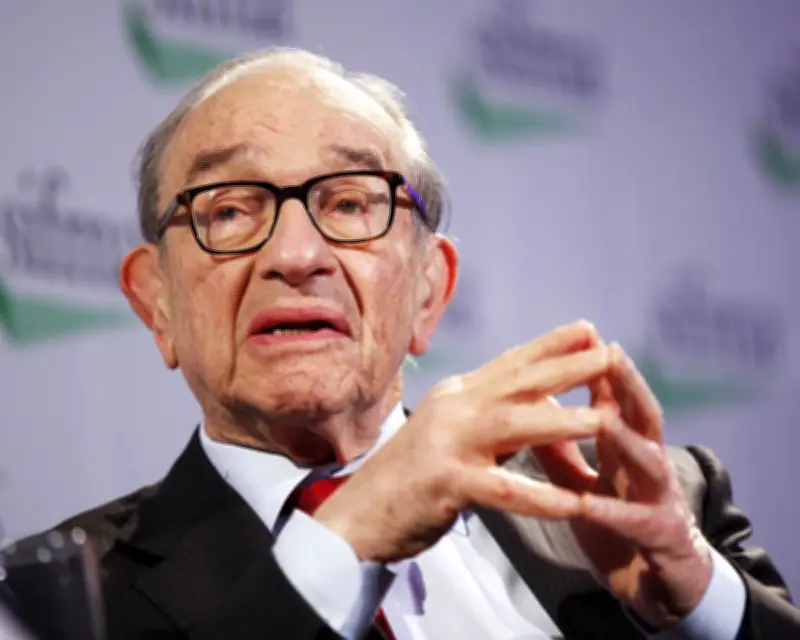
Alan Greenspan, the former chairman of the US Federal Reserve who oversaw the American economy for nearly two decades, has died at the age of 100. His death was announced by his family on Monday, though no cause was given.
Greenspan's Rise to Economic Power
Greenspan served as Fed chairman from 1987 to 2006, a period that included the 1987 stock market crash, the dot-com boom, and the aftermath of the September 11 attacks. He was initially appointed by President Ronald Reagan and reappointed by Presidents George H.W. Bush, Bill Clinton, and George W. Bush.
Born in New York City in 1926, Greenspan studied economics at New York University and later earned a doctorate. He worked as an economic consultant before entering public service, serving as chairman of the Council of Economic Advisers under President Gerald Ford.

Accomplishments and Criticisms
Greenspan was widely praised for his handling of the 1987 stock market crash, when he issued a statement assuring markets of the Fed's readiness to provide liquidity. He also guided the economy through the 1990s expansion, earning the nickname "the Maestro." However, his low interest rate policies in the early 2000s have been criticized for fueling the housing bubble that led to the 2008 financial crisis.
"He was a giant in the field of central banking, but his legacy is complicated by the role his policies played in the crisis," said economist Joseph Stiglitz. "He was not solely responsible, but his belief in deregulation and low rates contributed to the environment that allowed the crisis to happen."
Later Years and Legacy
After leaving the Fed, Greenspan wrote several books and remained a sought-after commentator. He also served as an advisor to major financial institutions. In his later years, he expressed regret for not foreseeing the financial crisis, telling Congress in 2008 that he had "found a flaw" in his ideology.
Greenspan is survived by his wife, NBC News correspondent Andrea Mitchell, whom he married in 1997. He had no children. A private funeral is planned.