New laws cracking down on e-bike and e-scooter riders are set to pass parliament in Queensland this week with changes that have been watered down following backlash. The sweeping Queensland reforms will still introduce licence requirements, random breath testing (RBT) and powers allowing police to seize and destroy non-compliant devices. However, exemptions have now been added for supervised teenagers and people with certain medical conditions.
Government listens to community concerns
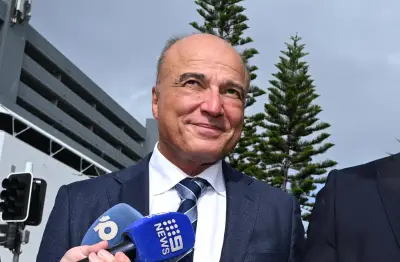
Transport and Main Roads Minister Brent Mickelberg said on Tuesday the crackdown was aimed squarely at illegal and souped-up e-bikes and scooters being ridden on roads and footpaths. "When we first began this reform process, we said we would make the tough decisions to keep the community safe," he said. "But we have also listened to the community, and will introduce provisions so those aged 12 to 17 and those with a medical condition will be able to use e-mobility devices under certain conditions. Our reforms ... strike the right balance between making our streets safer from those who do the wrong thing, while backing those people who do the right thing."
Key provisions of the new laws
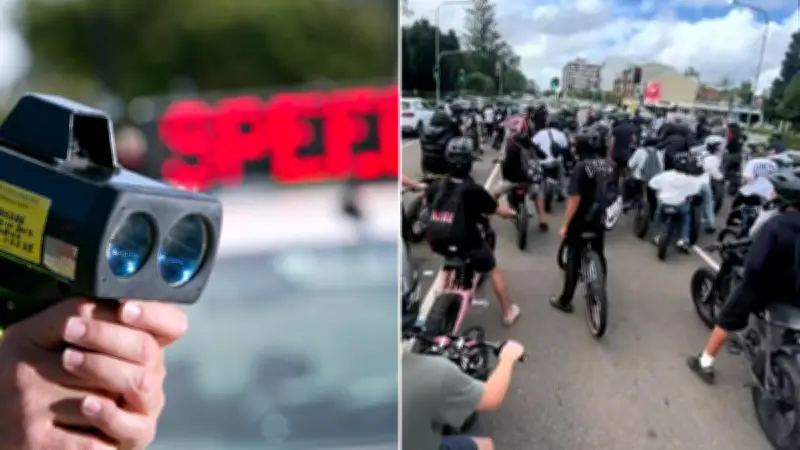
Under the proposed reforms, police from July 1 will have the power to seize and destroy illegal high-powered e-bikes and e-scooters used or left in public places, while riders caught using non-compliant devices face fines of more than $600. Riders will also face hefty penalties for speeding, failing to wear a helmet, careless riding, illegally carrying passengers and riding on prohibited roads. Police will also be able to conduct RBTs on riders of e-bikes, e-scooters, bicycles and other personal mobility devices (PMD) like e-skateboards or e-unicycles on roads and paths, with riders over the limit facing fines of more than $500.

Speed limits and licensing
New speed limits of 12km/h will apply on footpaths and when riders pass pedestrians on shared paths, while e-scooter and other personal mobility device riders will also be allowed on more roads with speed limits of up to 60km/h to ease footpath congestion. From August 31, riders will generally need to be at least 16 years old and hold a driver licence, including a learner licence, to ride an e-bike, e-scooter or other PMDs. Exemptions will apply for children aged 12 to 17 riding under parental supervision, people with certain medical conditions and riders in some recreational settings such as rail trails and mountain bike tracks.
Fines and penalties
The government also eased proposed speed restrictions, setting a 12km/h limit on footpaths and when passing pedestrians on shared paths, up from the 10km/h cap recommended by a parliamentary committee. On isolated paths, riders will still be able to travel at up to 25km/h. Speeding fines will range from $345 to as much as $1,986 depending on the offence. Parents may also face fines if children under 16 are caught riding illegally, with penalties of $518 for compliant devices and $620 for illegal devices.
European-style standards and transition period
The reforms introduce European-style standards for e-bikes and e-scooters, limiting devices to 25km/h unassisted and requiring e-bikes to comply with European Standard EN15194. An alternative compliance pathway is also being developed for e-bike owners whose devices do not meet the European standard. Users will have a 12-month transition period from August 31 to ensure their devices comply, with the new standards to be fully enforced by the end of February 2027.

Reactions from opposition and advocacy groups
Opposition transport spokesman Bart Mellish said the legislation had faced fierce criticism throughout the consultation process. "This 'nation leading' legislation needs more panel beating than a demolition derby car trying to pass a roadworthy," he told parliament. He said the bill had been labelled "a disaster by all stakeholders" and subjected to "some of the most vehement criticism I've seen of a bill in my time in this parliament". Road safety advocacy group Amy's Foundation managing director Katey Bates said the reforms were necessary because the overwhelming harm was being caused by illegal high-powered devices. "Last year there were 12 Queenslanders killed in e-mobility incidents. Only one of those was on a legal e-mobility device," she said. "Over 2000 Queenslanders each year are hospitalised. Something had to be done and we support the government for implementing these nation-leading changes to do that."
Focus on illegal devices, not families
Bates said the laws targeted dangerous behaviour and illegal devices rather than families riding safely. "What we're targeting through this is making sure that the illegal devices are off our roads and that poor and dangerous behaviour is not tolerated," she said. "We're not targeting the families riding their bikes to school." She also backed the new licensing requirements, saying they created an opportunity for education around safe road use. "The other opportunity through the licensing that is being implemented is one of education because this will provide the first type in Australia of e-mobility and cycling education," she said.
Concerns over imports and international operators
The government has also raised concerns about illegal high-powered e-bikes being imported and sold in Australia, with Mickelberg saying regulating those devices was ultimately a matter for the federal government. Some international shared e-scooter and e-bike companies have reportedly warned they could pull services from Queensland if forced to comply with the tougher new laws, but Mickelberg said companies would still be expected to meet the same rules as riders and private owners. "I don't think it's reasonable for one rule for Queensland and another for corporations," he said.
Comparison with other states
The reforms set to pass parliament this week broadly mirror European-style standards, capping e-bikes at about 250 watts and 25km/h, but go further than many overseas jurisdictions by introducing random breath testing and police seizure powers for illegal devices. Other states have taken a patchwork approach, with private e-scooters still tightly controlled through trials or bans in parts of NSW, Victoria and South Australia. Western Australia and Tasmania already have age limits for some e-mobility devices, while NSW is weighing its own minimum age requirement.