Australia’s spearfishing community, left shattered by the deaths of two of its own in separate shark attacks, has pleaded for increased funding to tag and research the ocean predators.
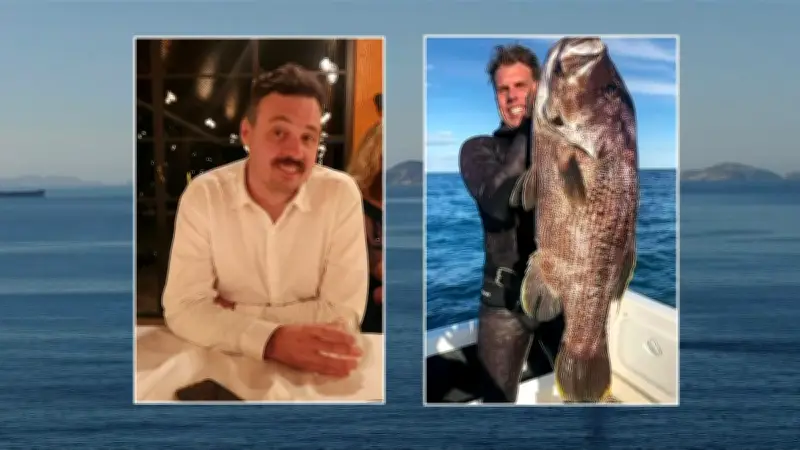
Steven Mattaboni, 38, was taken by a great white off Rottnest Island on May 16, and Daniel Turpin, 35, was killed by a shark near Albany in WA’s Great Southern on June 6.
“Well and truly — (the two fatal attacks) have rocked the community,” Australian Underwater Federation – Spearfishing chair Arnold Piccoli told 7NEWS.com.au.

Piccoli was among the huge crowd as father-of-two Mattaboni was farewelled at Optus Stadium’s River View Room in Perth on June 9. He described him as a “great, great guy” who would help anyone whenever there was an opportunity.
Since 2000, there have been 23 fatal shark attacks in WA, with surfers and bodyboarders accounting for nine of those tragedies, swimmers (five) and scuba divers (four). Three spearfishermen have been killed in that same period, including the two recent attacks.
Piccoli dismissed talk that spearfishing was more dangerous than other ocean activities, pointing to his community’s buddy system and specialist gear, including wetsuits that can protect against abrasive reef and some marine life, and spearguns to prod dangers away. “It’s probably why we’re at the bottom-end of the categories,” he said, conceding though that people can and have died even “when you do everything right”.
More broadly, there were 65 unprovoked shark attacks across the world in 2025, according to the Florida Museum of Natural History, with 21 of those in Australia. Five of those were fatal.
The WA government has spent about $35 million on shark mitigation since 2017, but Piccoli said only about 200 great whites had been tagged in the state’s history. By comparison, NSW has reportedly tagged about 2800 sharks with the assistance of smart drumlines, a measure WA axed when only two white sharks were caught in two years. The Queensland government announced in 2025 it would pour an additional $88 million over four years into shark management.
Piccoli, who is not calling for a white pointer cull, met with the WA government last week to argue the state’s tagging program needed to be ramped up to better understand the true nature of shark movements and populations along the coast. He believes Cockburn Sound from August, a period of heightened pink snapper activity, could be the place to start a renewed effort. The Department of Primary Industrial and Regional Development has a history of tagging operations at the site.
“Too many people I know have been lost (to shark attacks),” Piccoli said, adding the benefit would be to “all water users in WA”, not just the spearfishing community. “Today we have the technology and the money to do a far better job. We need more research — tagging is the way to do it.”
WA Fisheries Minister Jackie Jarvis said the recent attacks involving spearfishers are “tragedies that have been felt by the entire community”. “Our heartfelt condolences go out to the men’s families, friends and their communities,” Jarvis said.
The Minister said WA’s shark hazard mitigation strategy — including a shark tagging program, shark notification system that provides updates on activity and sightings, the SharkSmart WA app and website, beach enclosures and aerial and ground patrols — is “one of the most comprehensive approaches in the country”. “The strategy is delivered in partnership with other organisations, including Surf Life Saving WA and Surfing WA, and provides public safety advice to help people make informed decisions about their water use. Since the strategy’s introduction, the State Government has continued to build on its shark hazard mitigation policies. We will continue investing in these measures to help keep our water users and coastal communities as safe as possible.”

It comes as a WA council reveals plans to install shark bite kits along a stretch of popular beaches. An emergency kit bought precious time during the frantic moments when Leah Stewart, 35, was attacked at Sydney’s Coogee Beach on Saturday. The Town of Cambridge in Perth will spend $10,000 on ten kits that are packed with life-saving equipment, including tourniquets, bandages, emergency blankets and instructions on how to use them. “There’ll be canisters on a very visible pole in the event of out-of-hours or when the beaches are not patrolled they’ll have access to emergency kit,” Cambridge Mayor Gary Mack told 7NEWS. The first will be installed at City Beach before the start of summer.