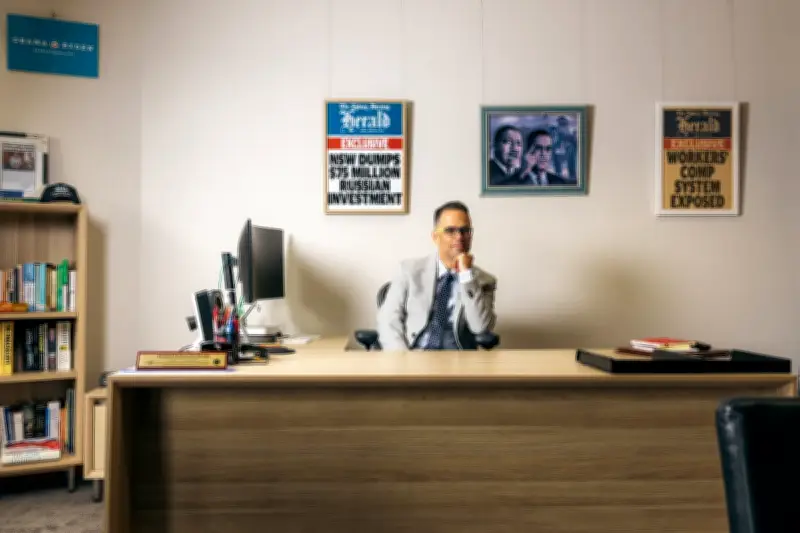
New South Wales Treasurer Daniel Mookhey will present his fourth Labor budget on Tuesday, focusing on cost-of-living relief while maintaining fiscal discipline. Commuters will benefit from reduced public transport fares as the Minns government aims to ease financial pressures without fueling inflation.
Cheaper Public Transport
The budget will lower daily and weekly caps for Opal card and credit card users on trains, trams, buses, and ferries. Currently, passengers receive free travel after spending $50 in a week, with daily caps of $19.30 on weekdays and $9.65 on weekends. Seniors have a $2.50 daily cap. While transport relief is offered, NSW will not introduce free travel like Victoria or 50-cent fares like Queensland.
Discipline and Reform
Mookhey emphasized that the budget is about "relief, reform, and discipline." He stated, "It's not a slogan, it's a strategy reflective of our circumstance." The government aims to address cost-of-living pressures while ensuring economic stability. Key areas include renewable energy transition and housing incentives. An additional $225 million will be allocated for infrastructure connecting the south-west renewable energy zone, and interest-free loans for low-income families to install solar panels will continue.

Infrastructure and Rail Maintenance
Labor will increase heavy rail maintenance spending by $200 million in 2026-27, bringing total investment to $2.1 billion, following rail network disruptions. The budget may also include funding for new carriages, framed as both a rail upgrade and a local industry plan. Additionally, $130 million will be allocated for new walking tracks, picnic areas, and visitor centers in national parks, including the Great Koala national park.
Economic Context
The NSW economy is expected to grow by just 1%, driven by renewable energy investment. Stamp duty revenue is forecast to fall due to a property market slowdown, resulting in a $5 billion downgrade over forward estimates. Interest rates on public debt have risen from 1% to 5.5%, with gross debt at $177.2 billion, $11 billion below initial forecasts. The budget also faces pressure from federal NDIS reforms, with states expected to provide services for participants leaving the scheme.
Political Strategy
The disciplined budget helps Labor define its election battle against the Coalition and One Nation. Premier Chris Minns aims to project responsibility. A May Resolve poll showed Labor's primary vote at 32%, with the Coalition at 26% and One Nation at 22%. Mookhey criticized Coalition promises of new metro lines as funded by privatization, stating, "We are the only team with a real plan to help working families in NSW."