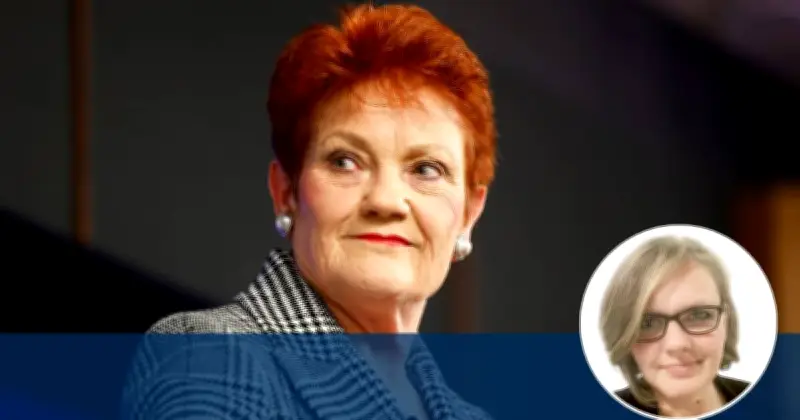
Zoe Wundenberg has drawn a sharp comparison between Pauline Hanson's push for a monocultural Australia and the dynamics of coercive control, arguing that the One Nation leader's vision would strip individuals of their autonomy and cultural identity.
Coercive control defined
Coercive control, a term often used in domestic violence contexts, refers to a pattern of behaviour that dominates and isolates a person through manipulation, intimidation, and restriction of freedoms. Wundenberg, a writer and commentator, contends that Hanson's policies mirror this pattern on a national scale.
In a recent opinion piece, Wundenberg wrote: "Pauline Hanson's monocultural Australia is not about unity; it is about control. It demands that everyone conform to a single cultural norm, erasing the rich tapestry of backgrounds that make up our nation."

Hanson's stance on multiculturalism
Pauline Hanson has long been a vocal critic of multiculturalism, arguing that it leads to division and a loss of Australian identity. She has called for stricter immigration policies and a focus on what she terms "Australian values." Her party's platform includes reducing immigration and promoting assimilation over integration.
According to Wundenberg, this approach is fundamentally flawed. "When you force people to abandon their heritage and adopt a monolithic culture, you are exercising a form of coercive control. It denies individuals the right to choose their own identity and path," she said.
Impact on individuals and society
The implications of such a policy extend beyond cultural loss. Wundenberg argues that it would lead to increased social tension and mental health issues. "Multiculturalism is not just about food and festivals; it is about respecting the right of every person to live authentically. A monocultural mandate would create a society where difference is seen as a threat, not a strength."
Research from the Australian Human Rights Commission indicates that a significant majority of Australians support multiculturalism, with 89% agreeing that it is good for the country. Wundenberg's critique highlights the gap between public sentiment and Hanson's political agenda.
Political reactions
Hanson's proposal has drawn criticism from across the political spectrum. Labor and Greens politicians have condemned it as divisive, while some Coalition members have distanced themselves from her rhetoric. However, Hanson remains steadfast, claiming that her views reflect the concerns of ordinary Australians.
Wundenberg's piece serves as a reminder of the personal toll such politics can take. "As someone who has experienced coercive control firsthand, I recognise the tactics. The constant pressure to conform, the devaluation of your own culture, the isolation from your community—these are not signs of a healthy society."
Conclusion
Zoe Wundenberg's comparison of Pauline Hanson's monocultural vision to coercive control offers a powerful lens through which to view debates on immigration and identity. It challenges Australians to consider not just the political implications, but the human cost of erasing diversity in the name of unity.