Tens of thousands of Australians face a housing crisis as experts warn a potential downturn could push new homeowners into negative equity. Negative equity occurs when the amount owed on a mortgage exceeds the property's current market value, making it impossible to sell for a profit.
Government scheme participants vulnerable
Those who purchased homes under the federal government's 5 per cent deposit scheme are particularly at risk, according to property analysts. Since its launch in 2020, approximately 300,000 Australians have taken advantage of the scheme, which allows buyers to secure a home with a minimal deposit.
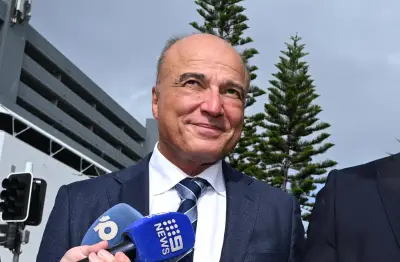
Sydney auctioneer and property market analyst Tom Panos told Sunrise on Tuesday that a 10 per cent market downturn is highly probable. He illustrated the impact of negative equity with an example: "You buy a property for a million dollars, you've borrowed 95 per cent, you put 50 grand in. The property drops from being worth a million to say $900,000, but you owe the bank $950,000; that is negative equity."

Panos emphasised the devastating consequences for young buyers: "If you're struggling to make the loan repayments and then you sell it, you'll be selling it at a loss. That is devastating if you're a young person, because to make up losing $50,000 plus the interest and the legal fees, stamp duty, whatever you've paid, it can become a very, very disastrous experience as a young couple."
'Mortgage prison' warning
Personal finance expert Betsy Westcott warned that approximately 22,900 individuals who bought homes between October and February are in the "real danger zone" of negative equity. This period coincided with the expansion of the 5 per cent deposit scheme to include all first home buyers, regardless of income or property price.
"For those that have recently bought, it's a very real danger," Westcott said on Sunrise. Homeowners caught in negative equity face what she described as "mortgage prison" — being forced to either sell while still owing the bank money, or continue paying down the debt while struggling with higher interest rates. "It's not fun, just like it sounds," she added, noting that rising interest rates exacerbate the situation by increasing mortgage costs.
Long-term perspective advised
Panos attributed the likely downturn to multiple factors, including geopolitical tensions, the federal budget, and three consecutive interest rate rises, with more expected. "All this means that sentiment is down. Borrowing capacity is down and the absolute possibility of negative equity is there, mainly for people that have borrowed the most amount of money," he said.
Treasurer Jim Chalmers defended the market correction as necessary for housing affordability, stating, "Our job here is not to target a particular price outcome, our job here is to make sure that there are more affordable options for first homebuyers to get a toehold in at what has been historically a really difficult market." He suggested falling clearance rates could open up the market for young Australians.
However, Panos noted that the biggest price drops are occurring in expensive areas like Sydney's Eastern Suburbs, Woollahra, Bellevue Hill, and Neutral Bay, not where first home buyers typically shop. He advised potential buyers to adopt a long-term investment horizon of three to 10 years, rather than one to three years. "Even if we get a price correction of 10 per cent, if you can wait it out for a couple of years, that property will go up," he said.
Panos predicted the downturn could eventually reach lower-priced markets, particularly in regional areas where investors have built large portfolios. "I do see the whole market eventually being impacted and that does mean the lower price point," he concluded.