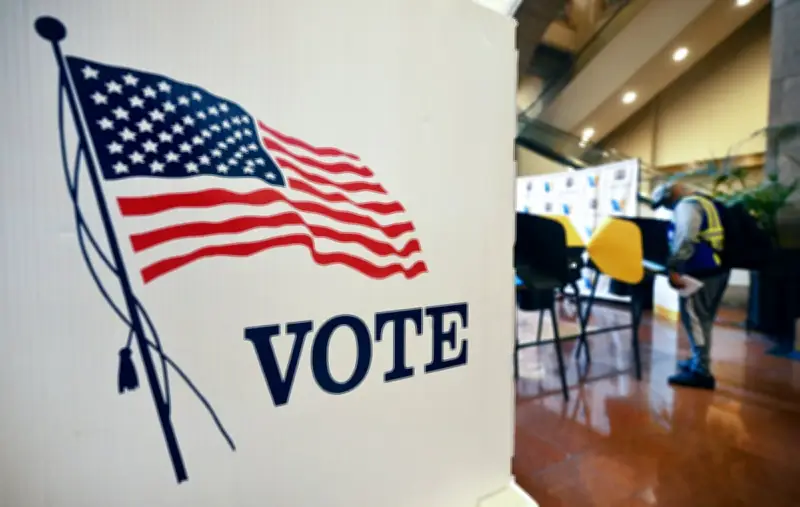
California's primary election is set for 2 June, and voters will have the opportunity to select any candidate from a long list of gubernatorial hopefuls, regardless of their own party registration. This system, known as the open primary or 'jungle primary', was implemented under former Governor Arnold Schwarzenegger to increase competition in races that Democrats had consistently won. Schwarzenegger, who left office in 2011, was the last Republican elected to a statewide office in California.
How the Open Primary Works
Before the reforms, each political party chose a nominee to advance to the general election, with only registered party voters participating in the primary. In 2010, California voters approved a ballot measure backed by Schwarzenegger that changed this traditional partisan primary. The new system consolidated the previously separate primaries for Democrats, Republicans, and third parties into a single race. All candidates for a particular office run on the same ballot, and the two candidates who receive the most votes, regardless of party affiliation, advance to the general election. This often results in a general election between two Democrats in California. Proponents argue that the top-two system encourages candidates to consider the needs of all voters, not just those in their party, as the primary is open to all registered voters. Nebraska and Washington use similar processes. Abel Maldonado, a self-proclaimed 'pragmatic Republican' who led the California effort, told the Atlantic in 2015 that with the open primary, elected officials 'have to work for the taxpayers'.
Why Some Democrats Want to Change the System
Despite the Democratic stronghold in much of California, there is recurring fear that multiple Democratic candidates in a race could dilute the party vote and inadvertently allow two Republicans to compete in the general election. These concerns resurfaced in this year's governor race after two Republicans, conservative pundit Steve Hilton and Riverside County Sheriff Chad Bianco, surged to the top of early polls. Conversely, some Republicans worry about being excluded from general election ballots in the reliably Democratic state. The likelihood of two Republicans making the general election has since subsided, partly due to two major events. In April, Democratic frontrunner Eric Swalwell suspended his campaign amid a spate of sexual assault allegations, which he has denied. This opened an opportunity for Xavier Becerra, the former US Secretary of Health and Human Services, to surge to the front of the crowded Democratic pack. Also in April, Donald Trump endorsed Hilton, a move that appeared to consolidate Republican voters around the British-born commentator. The latest polls before Tuesday's primary show Hilton polling closely against Becerra and billionaire Democratic candidate Tom Steyer.

What Happens Next
Steven Maviglio, a Democratic political strategist, has pushed for a 2028 ballot measure to repeal the top-two primary system, regardless of the 2026 outcome. 'It's a failed experiment that even the remote possibility of a Democrat having to choose between two Trump Republicans in November is enough to scare the bejesus out of anyone,' Maviglio told the San Francisco Chronicle in mid-May. He filed a proposal with state officials this month, requesting a return to partisan elections. That initiative is stages away from appearing on a ballot. The California Attorney General must issue a summary and title for the proposal, and a legislative analyst will assess its cost. A certain number of registered voters must sign on for it to advance. Rusty Hicks, chair of the California Democratic Party, echoed the call for reform in an interview with the Guardian earlier this year. 'The current system we have does not work,' he said, referring to the prospect of a Republican gubernatorial bid fueled by a cluttered slate of Democrats. 'It needs to be revised or repealed.'