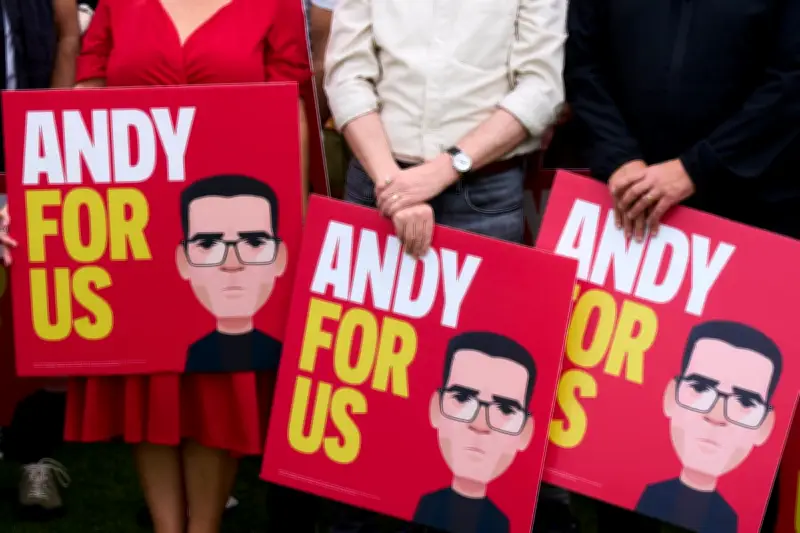
Labour supporters celebrating Andy Burnham’s byelection win. Photograph: Christopher Thomond/The Guardian
Andy Burnham has demonstrated that Labour can overcome Reform UK, but his pledge of transformation must evolve into a substantive agenda rather than mere rhetoric. The former Greater Manchester mayor secured a decisive victory in the Makerfield byelection, capturing 55% of the vote against Reform UK’s 35%. His success stemmed from redefining what voting Labour represents in Makerfield, shifting the party from an unpopular incumbent to a symbol of change.
Prime Minister Keir Starmer’s assertion that Starmerism was responsible for defeating Reform lacks credibility. Polling by Persuasion UK indicates that Labour won due to Burnham’s personal appeal, his anti-Starmer stance, and his left-wing economic message. In his victory speech, Burnham promised economic security through an active state, emphasizing state intervention as buyer, planner, and manager. However, translating this vision into reality requires concrete policies on essential goods, public control, fiscal expansion, industrial renewal, and fairer housing, work, and migration rules.

This byelection was unique: Burnham is a well-known figure in northern England with a mayoral track record, adding a dramatic subplot to Labour’s leadership dynamics. A general election would differ, as Burnham’s local appeal may not resonate as strongly in Scotland, Wales, or the southeast. Yet he skillfully combined anti-Starmer and anti-Reform sentiments by positioning himself both within and against Labour, offering a more grounded and hopeful politics.
Starmer now faces a critical choice: either initiate a leadership contest, stand in it, and challenge his rivals, or acknowledge his diminished authority and step aside, allowing the party to select a successor. A coronation of Burnham might be tempting given his parliamentary support, but it risks repeating Starmer’s error of promising change without specifying its content. Ironically, a leadership contest could benefit Burnham by forcing him to convert his Makerfield rhetoric into a detailed mandate, outlining his first 100 days, legislative needs, costs, regulatory actions, Treasury confrontations, and breaks from Starmerism.
The primary argument against a contest is practical: a prolonged campaign could portray Labour as unstable and divided, reminiscent of the Conservatives in 2022. Burnham might avoid a battle by negotiating a clear, concise programme with parliamentary and union support, while offering roles to defeated factions. It appears Starmer’s days are numbered. His successor will need a mandate for a fresh agenda. If MPs can unite around Burnham’s plan, a contest may be unnecessary. However, if they merely rally behind his poll ratings due to Starmer’s weakness, a contest becomes more essential.
Do you have an opinion on the issues raised in this article? If you would like to submit a response of up to 300 words by email to be considered for publication in our letters section, please click here.