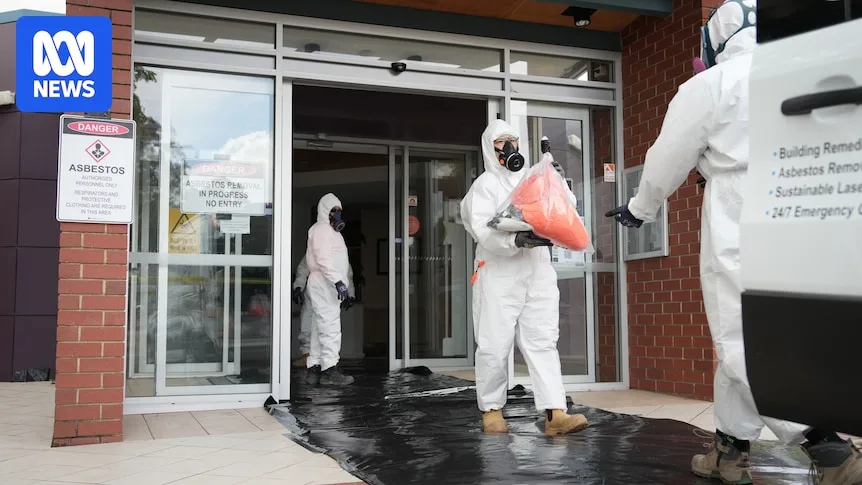
The Australian Capital Territory has closed 70 public schools today as it scrambles to remove coloured sand products contaminated with asbestos, making it the only jurisdiction in Australia to shut down its entire public school system over the issue. While the national recall affects all states and territories, the ACT's decision puts it at odds with other governments and even private schools operating under the same legislation.
The closures follow a national recall by the Australian Competition and Consumer Commission after laboratory testing detected tremolite, a naturally occurring asbestos, in coloured sand products. The ACT's Work Health and Safety Commissioner, Jacqueline Agius, said the territory had also found chrysotile asbestos in a sample seized from a stationery store. Over the weekend, Kmart and Target issued recalls for four additional products.
Education Minister Yvette Berry defended the closures, citing the ACT's rigorous asbestos removal laws under the Work Health and Safety Act 2011, which require all removal work to be done by licensed professionals. She noted that the territory's strict regulations stem from its history with the Mr Fluffy scheme, which left many homes contaminated with asbestos insulation in the 1960s and 70s.

In contrast, independent and Catholic schools in the ACT have managed to avoid full closures. Tracy Taylor, executive director of Independent Schools ACT, said 11 of 18 schools confirmed they had no sand products, while seven found small samples that were safely removed by licensed assessors. The Catholic Education Archdiocese of Canberra and Goulburn reported isolating affected classrooms without shutting entire schools.
Outside the ACT, only a handful of schools have closed. One independent school in Brisbane and another in Tasmania shut down for cleaning, while two Catholic special schools in South Australia closed temporarily. The South Australian education department said over 300 public schools had been found to have the coloured sand, but none were closed.
Officials and experts have stressed that any asbestos found in the sand poses a low health risk. Despite this, the ACT government has chosen to err on the side of caution, a move that has drawn both support and criticism as the nation watches how each jurisdiction handles the recall.