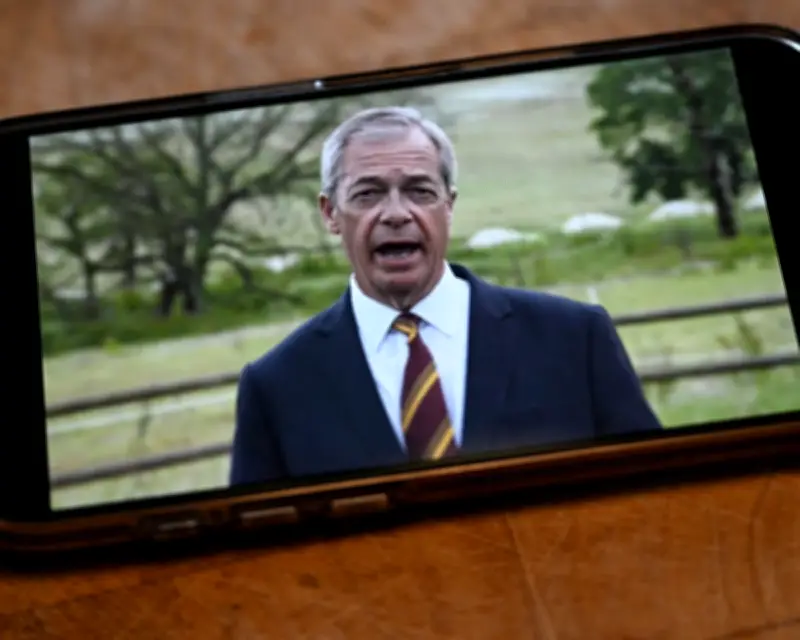
Nigel Farage broke his self-imposed house arrest by streaming an address to the nation from a field. The email invitation arrived shortly after 7am, announcing that Farage would make an 'address to the nation' an hour later. The grandiosity and self-importance of such a move are usually reserved for monarchs or prime ministers during emergencies, not for a leader of a political party with just eight MPs.
However, pomposity has become Farage's last resort. A few months ago, he would have held a press conference in central London. Now, he is a virtual prisoner in his own home, afraid to face questions about the £5 million he claims was 'gifted' by a Thai crypto billionaire. Reform is effectively leaderless, with only occasional videos from undisclosed locations. Farage is determined not to be found.
This time, he appeared in the middle of a field. As many guessed, he wanted to discuss the brutal murder of Henry Nowak in December. Henry, an 18-year-old, was handcuffed by police as he lay dying after the killer stabbed him and falsely accused him of racism. After the court verdict on Monday, Henry's father, Mark Nowak, gave a dignified statement, asking politicians not to use his son's death for their own agendas. 'We don't want his death used to create further division, hatred or tension,' he said.

But Farage ignored the plea. He is not the type to miss an opportunity. Division, hatred and tension are his lifeblood; he cannot survive without them. With Reform losing support to Restore in the Makerfield byelection, Farage saw a chance to bring the 3% of outright racists back into the fold and reassure bigots that he had not gone soft.
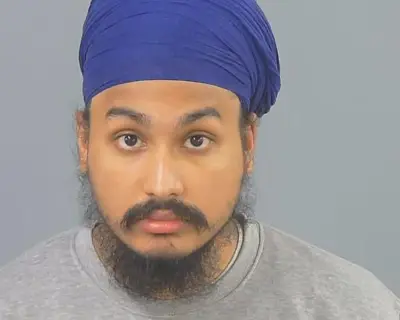
Farage began by saying he would play body-cam footage of Henry's last moments. Fortunately, a technical glitch meant viewers only saw Farage looking gormless in a field. He repeated Henry's last words, 'I can't breathe,' comparing them to George Floyd, whom he called a 'career criminal.' There was no comparison: Floyd was murdered by a police officer, while Nowak was murdered by Vickrum Digwa, a young Sikh man obsessed with knives.
For Farage, the murder was not a personal tragedy but a tragedy of mass immigration. He claimed black and brown people come to Britain with the intention of killing white people, that British culture is under threat, and that two-tier policing gives foreigners the benefit of the doubt. He cited Allison Pearson, a columnist so extreme even the Telegraph no longer promotes her stories.
Farage declared Britain unrecognizable and called for a 'big white fightback.' He ignored the hypocrisy: when a white person is killed by a foreigner, it is used to repress minorities; when a black person is killed by a white person, the victim is blamed. He urged a response of 'pure cold rage,' an invitation to violence reminiscent of the Southport riots. He ended by saying he feared where the country would be in a couple of years.
Later that day, Farage was absent from the Commons when Home Secretary Shabana Mahmood made a statement on Nowak's murder. Instead, Reform was represented by Robert Jenrick, Richard Tice, Suella Braverman, and Lee Anderson. Mahmood urged MPs not to treat the case as a trial about Sikhs or racism, but as murder. She also called for police accountability.
Shadow Home Secretary Chris Philp went Farage-lite, claiming his intervention forced the government to make a statement—a lie, as a statement was always planned. He cited cases of Valdo Calocane and Axel Rudakubana to suggest institutional racism, rather than exceptions. Lib Dem Max Wilkinson and Labour's Tan Dhesi called out Reform for exploiting the tragedy. Tice boorishly shouted them down, revealing his role as a mere cheerleader for Farage, destined to be dispensable collateral damage.
Jenrick insisted 'white lives matter,' portraying whites as an embattled minority. Mahmood, of Pakistani descent, suggested it was too late to avoid pitting white Britons against black Britons. The plea to keep politics out of tragedy was wasted on those who thrive on division.