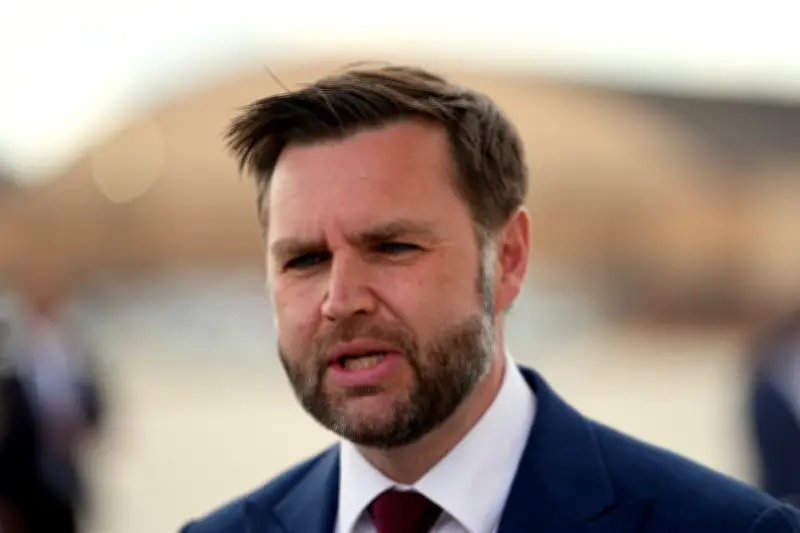
US Vice-President JD Vance has claimed that the United States is "very close" to reaching a peace deal with Iran, even as American forces launched new strikes against the country. The comments came after the downing of a US Army helicopter near the Strait of Hormuz, which prompted what the Pentagon described as "self-defense strikes."
Vance's Optimistic Assessment
In an interview with CBS set to air later this week, Vance stated, "Right now, I feel that we are in a position to get a deal that is good for the United States economically and that really does deal with the Iranian nuclear program." He emphasized that the goal is to ensure Iran never acquires a nuclear weapon, not just during Donald Trump's presidency but for the long term. "I think we're very close to achieving that goal. But we still have some wood to chop," Vance added.
The vice-president suggested that a deal could materialize before the midterm elections, saying, "We're going to know a lot before the midterm elections. I think that the deal could happen in the next week, but the deal could also happen months from now."

Escalation Amid Diplomacy
The diplomatic overtures were undercut by renewed military action. US Central Command announced on Tuesday that American forces had launched "self-defense strikes" on Iran in response to the downing of an Apache helicopter near the Strait of Hormuz. Centcom described the mission as "a proportional response to unjustified Iranian aggression."
Earlier on Tuesday, Trump posted on Truth Social that the US "must, of necessity, respond to the attack" but also claimed there was a "good chance" of signing a deal with Iran "in two or three days."
Background of the Conflict
The US and Israel launched a war against Iran in February, triggering retaliatory strikes from Iran against US Gulf allies, a blockade of the Strait of Hormuz, soaring global energy costs, and a fragile ceasefire. Over the past three and a half months, the Trump administration has repeatedly claimed it is close to a deal, while accusing Iran of trying to stall until the midterms. Last month, Trump told cabinet members, "They thought they were going to outwait me ... I don't care about the midterms."
Iran has acknowledged ongoing discussions but says no final agreement has been reached. The talks have been complicated by Israeli strikes across Beirut, which prompted Iranian retaliatory strikes. Iran's parliamentary speaker, Mohammad Bagher Ghalibaf, condemned the attacks, declaring US bases and assets "legitimate targets."
US Demands and Trump's Stance
Secretary of State Marco Rubio detailed Trump's demands for a deal during congressional testimony, including "severe and long-term limitations" on Iran's nuclear program. In an interview with NBC, Trump signaled that if a deal is reached, the US would cooperate with Iran to destroy its uranium stockpile. "If we make a deal ... we'll all go together. It'll be our equipment. We'll take it out and destroy it," Trump said. "Now, if we don't make a deal, then we're going to take them out militarily very harshly."
The situation remains fluid, with the possibility of either a diplomatic breakthrough or further escalation hanging in the balance.