Immigration is falling in Britain. It is falling so fast and so hard that net migration to the UK nearly halved between 2024 and 2025. Before long, we could conceivably be a shrinking population, with more people leaving the country than coming here. This is not due to an exodus of bright young Britons fleeing overseas, though you would not blame them given how hard they are finding it currently to get jobs. The rise, as the Institute for Government's Sam Freedman helpfully points out, is mainly in foreign students and foreign workers going home. Even small-boat crossings are down on last year. We have, in short, finally made ourselves as unattractive to the rest of the world as leave voters always wanted. This means that, sooner or later, populists who built their careers on railing against supposedly uncontrolled immigration will need another scapegoat to explain why taking back control has not magically solved all the country's problems. With grim inevitability, they are finding it in turning on migrants who are already here.
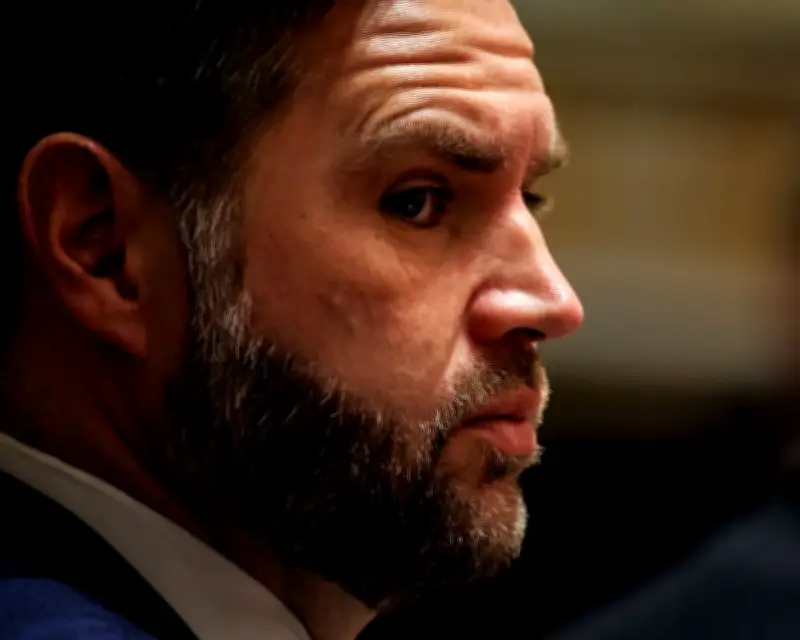
That is the background to two hand grenades lobbed aggressively into British politics from across the Atlantic last week, causing enough concern in Downing Street to prompt a rare public rebuke. The claim from the US vice-president, JD Vance, that "righteous anger" was "the only response" to the murder of 18-year-old Henry Nowak would have been provocative enough, given its pointed echo of Nigel Farage's now widely condemned call for "pure, cold rage". But Vance took it further even than Farage dared, arguing that Henry would be alive today "if the last few generations of European elites had stood their ground against the politics of self-hatred and the mass invasion of migrants". In other words, life would be better generally if Britain had pulled up the drawbridge decades ago. Seemingly the vice-president either does not know or does not care that Henry's family has Polish roots, for Vance was of course targeting the killer, Vickrum Digwa, the British-born son of a British-born father whose mother is understood to have been born in India, oddly enough like Vance's own mother-in-law. Washington's new favourite British wannabe populist, Rupert Lowe of the hard-right splinter party Restore, has already called for Digwa's "foreign family" to be deported.
Not to be outdone in the offensiveness stakes, the US defence secretary, Pete Hegseth, then marked the anniversary of the D-day landings in France during what is a crucial election year by complaining that European beaches were being stormed today by "different, dangerous ideologies", arriving in small boats. Illegal border crossings are falling in Europe too, with a 40% drop in the first four months of 2026. He did not appear to grasp the irony that those defending the beaches on D-day were the Nazis.

This was always going to be a tense few weeks for transatlantic relations, leading up to a critical Nato summit in July but also to a long-awaited British government crackdown on social-media harms that is liable to anger Maga's free-speech warriors. But Vance's intervention raises the stakes alarmingly. Most of what Europe has endured under Trump's second presidency, from on-off trade wars to the threatened withdrawal of US troops from Europe, can just about be explained by a brutally self-interested "America first" doctrine under which the US now ruthlessly looks after its own, at the rest of the world's expense. But picking a fight over the immigration policies of some far-off island with which the US does not share a border does not fit the pattern. It does nothing to help the average voter in rural Ohio or small-town Texas. It is a purely ideological, or perhaps more accurately evangelical, attempt to reshape the world in Maga's image that dangerously undermines the democratically elected governments of supposedly friendly countries in the process.

David Lammy, the former foreign secretary, let it be known he had called his supposedly great friend Vance and told him he was wrong. But that seems unlikely to deter Vance, for whom the idea that Europe is somehow trembling on the brink of civilisational collapse is more than a passing fad. It was Vance's argument at last year's Munich Security Conference that Europe's greatest threat came "from within" that seriously spooked European leaders, as much or even more than the accompanying threat to stop funding the continent's defence. Since then, the vice-president has deliberately broken the taboo of engaging with far-right politicians across Europe, from Germany's Alternative für Deutschland party to France's Marine Le Pen, before he actively, though unsuccessfully, weighed in on behalf of Hungary's populist leader Viktor Orbán during recent elections. Last month, he responded to a British far-right rally organised by Tommy Robinson by encouraging anti-immigration activists to "keep on going". Though the defeat of Orbán offers some reassurance that the US's influence has its limits, Vance is nothing if not a quick learner.
Where Trump's frequent broadsides against his allies seem scatter-gun, impulsive and often capable of being rescinded if the flattery is laid on with a sufficiently large trowel afterwards, Vance's are strategic and consistent. He has discovered a direct line to British voters via X. Bafflingly, X is still Westminster's social-media platform of choice despite the death threats, pornified images of female ministers and posts depicting Britain as a crime-ridden hellhole. The startling speed at which a tiny splinter party such as Restore has gained name recognition in Britain is an alarming illustration of how political influence is shifting now that half of British adults look to social media for their news. Lowe's meteoric rise owes far more to X's owner, Elon Musk, championing him after falling out with Farage than it does to a British rightwing press still mostly focused on Reform. It is hard to see Vance standing idly by if he is still in the White House, either as vice-president or even as Trump's successor, by the time Britain starts gearing up for the next election.
British politicians are not, of course, helpless in this oncoming storm. This country has laws against inciting violence online and powers to regulate social media, and it should not be afraid of using both. Strikingly, even among X blue ticks, Vance's intervention in the Nowak case met with surprising hostility, a reminder that the British right is split in ways that may be hard for outsiders to understand, but also perhaps that plenty of Britons still reflexively dislike being lectured by Americans. Yet, if nothing else, the past few days are a warning not to take our political sovereignty for granted. Sooner or later, we may need to defend it.