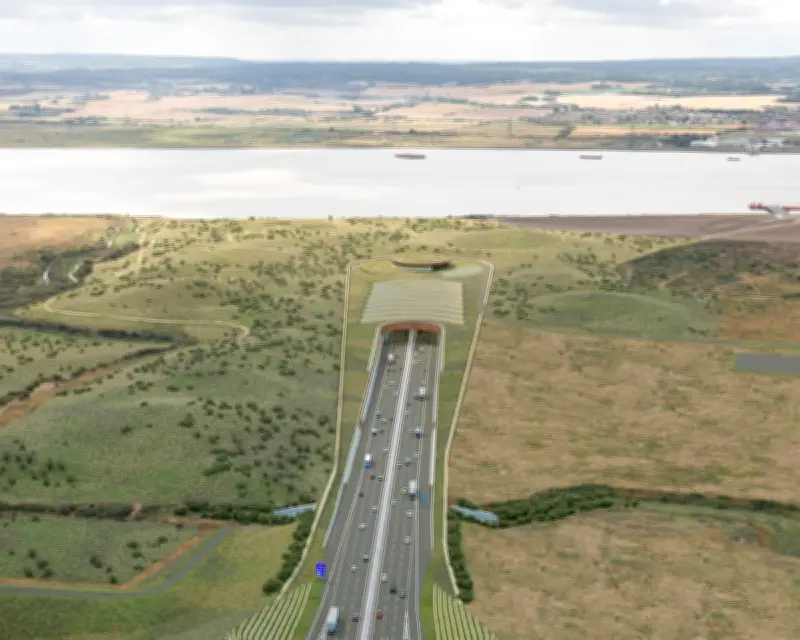
Ministers have earmarked more than £170 million extra to help build the Lower Thames Crossing road tunnel, fuelling concerns over the “spiralling” costs of one of the UK’s largest planned infrastructure projects.
Project Overview and Cost Concerns
The proposed £11 billion route under the Thames between Kent and Essex is already estimated to cost more each mile than the HS2 high-speed rail link from London to Birmingham. It was given the funding boost as part of a plan to spend £3.1 billion of public money on the project, before a hoped-for injection of £7.5 billion by a private sector firm.
The £174 million of extra cash will be used to fund public works on both sides of the tunnel and will be found from existing budgets, the Department for Transport (DfT) said.

Background and Control Shift
The Guardian revealed last year that the DfT had taken direct control of the Lower Thames Crossing project, forcing National Highways to relinquish its role as the main agency involved in planning and oversight. A licence to run the new tunnel and the existing Dartford tunnel about 7 miles to the west is expected to be handed to a private consortium in 2029, offered in perpetuity and overseen by a regulator. The completion date for works is now scheduled for 2034.
Political Support and Funding Details
The chancellor, Rachel Reeves, and the transport secretary, Heidi Alexander, are both keen to press ahead with the project, which they have said is “vital” and will ease congestion on the M25. However, the DfT confirmed it has yet to publish an “outline business case”, which would usually be produced before officials embark on large-scale works.
Despite the lack of an initial review document, the government allocated £590 million to the project in the 2025 spending review and a further £891 million in last autumn’s budget. The £1.48 billion total was then given a further £174 million boost in a road investment strategy document published in March, taking the total to £1.66 billion.
The chancellor described the £891 million awarded in the autumn budget as the “final tranche of government support to enable the private sector to take forward construction and long-term operation”. In total, the government has spent £3.1 billion on the Lower Thames Crossing, including significant funds spent on securing planning permission.
Criticism and Campaigner Response
The move to allocate extra funds to the project from the broader National Highways budget has prompted criticism, with campaigners accusing the DfT of siphoning money from the roads agency to boost spending on the tunnel without telling parliament.
Rebecca Lush, roads campaigner at the Transport Action Network, accused the DfT of hunting for funds to feed a tunnel project “quickly running out of control”. She said: “At the autumn budget, the chancellor announced the ‘final tranche’ of public funds for the Lower Thames Crossing. Yet now we find out that the DfT have bunged another £174 million towards this privatised road project, whilst refusing to publish the outline business case.
“The spiralling costs and secrecy have all the hallmarks of HS2, with LTC already costing more per mile than HS2. Whilst the government is nationalising the railways it is privatising our roads, demonstrating the utter incoherence in transport policy.”
Government Response
A DfT spokesperson said that the road tunnel was a vital infrastructure project, adding: “We have committed £3.1 billion to the Lower Thames Crossing to date, including £891 million to complete the publicly funded works needed to unlock private investment.
“While no decisions have been made on how users will be charged, any tolls will be regulated by an independent regulator to keep prices fair for drivers.”