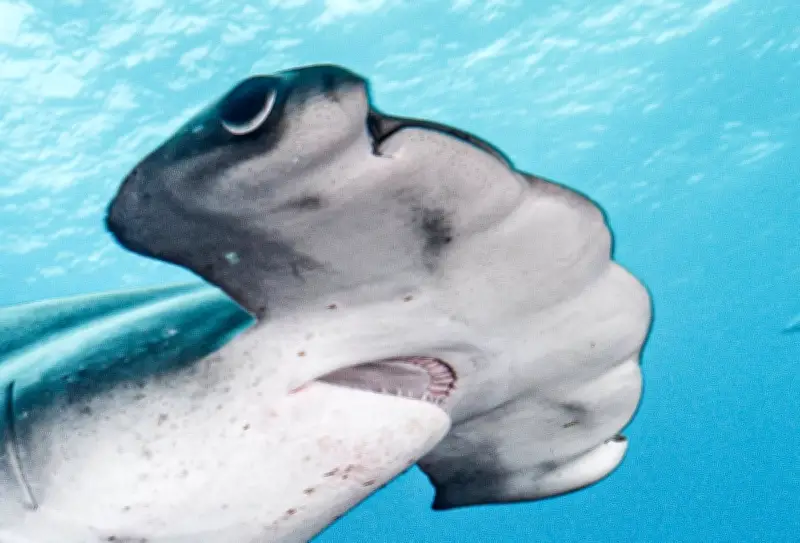
In the pristine waters of the Galápagos Islands, a scalloped hammerhead shark glides past a diver who holds his breath and a metal spear. The spear strikes the fish behind its dorsal fin, and the 2-metre shark darts away, unharmed but perturbed. This scene is part of a research expedition led by the Charles Darwin Foundation to study these critically endangered creatures.
Research Methods and Challenges
Carlos Robalino, a marine biologist from the Galápagos, is one of the divers on the expedition to Darwin and Wolf, the northernmost islands of the Galápagos marine reserve. For hours each day, he practices freediving to approach the sensitive sharks and collect skin samples. "Scalloped hammerheads are super-sensitive, very nervous," explains Simon McKinley, an ecologist on the dive team. The team uses a pole-spear to take biopsies, adding to a decade-long collection of samples.
Despite their abundance in the reserve—up to 150 sharks per hectare during peak season—studying them is difficult because capturing them could be fatal. The team uses non-invasive techniques like underwater cameras and chemical analysis of skin biopsies to understand their diet and behavior without harming them.

Migration Discoveries
Pelayo Salinas de León, a senior marine ecologist, uses a rebreather to approach sharks silently and attach satellite tags. In 2023, he tracked a scalloped hammerhead swimming 800 miles from Galápagos to Panama, and then another 1,800 miles westward. Subsequent tagging shows that 8 out of 10 tagged sharks migrate to Panama, likely pregnant females seeking mangroves to give birth.
Conservation Implications
These findings led to the species being listed under Appendix I of the Convention on the Conservation of Migratory Species, requiring signatory countries to protect them. However, the migration route passes through heavily fished areas. Illegal longlines are found even within the Galápagos marine reserve, and between Galápagos and Panama, industrial fisheries operate in unprotected gaps. In Panama, artisanal fishing still catches baby sharks and pregnant females, which are sold as ceviche.
Future Steps
The Charles Darwin Foundation is working with Panamanian authorities to introduce greater protections for the nurseries. After giving birth, the females continue westward to the Pacific equatorial front, a high-seas region rich in life but also heavily fished. Salinas de León hopes to study this area to propose seasonal closures or gear modifications to protect the sharks.
"You can have a false impression of security when you dive in Darwin and Wolf and see hundreds of hammerheads," says Salinas de León. "Galápagos represents a bubble frozen in time, but they’re still dying. We need to do more."