The United Nations has issued a stark warning about the state of the world's oceans, describing a "deepening crisis" that demands immediate and coordinated global action. The third World Ocean Assessment (WOA), a comprehensive report compiled by 600 international scientists over five years, highlights the accelerating impacts of climate change, pollution, and overfishing on marine environments.
Oceans Under Severe Strain
Covering more than 70 percent of the planet, oceans are essential for regulating the climate and feeding billions. However, the WOA warns that ecosystems are approaching critical tipping points. "The ocean is the foundation of life on Earth. But its health is at grave risk as ecosystems and habitats approach or surpass critical tipping points," the report states. It calls for stronger multilateral cooperation and decisions grounded in science.
Warming and Rising Seas
The report, covering data from 2018 to 2023, reveals alarming trends. Around 16 percent of the total increase in ocean heat content since 1955 occurred after 2018. Oceans have absorbed over 90 percent of excess heat and 30 percent of CO2 from fossil fuel burning. This warming causes sea levels to rise faster, doubling from less than 2.0 mm per year before 2015 to 4.3 mm in 2023. While seemingly small, these increases accumulate rapidly, threatening coastal communities.

Melting Ice and Shrinking Cover
The Arctic Ocean could become ice-free in September by mid-century, with earliest possible conditions in the 2030s under all emissions scenarios. Antarctic sea ice, which increased from 1979 to 2015, has declined sharply since 2016. This melting reshapes geopolitics, opening new shipping routes and intensifying competition among major powers.
Marine Ecosystems in Peril
Climate change forces fish species to move to cooler or deeper waters, with some facing extinction. Coral reefs are among the most threatened. Repeated marine heatwaves and storms leave little time for recovery, pushing reefs toward collapse. The WOA warns that 90 percent of reefs could disappear if warming exceeds 1.5°C above pre-industrial levels.
Plastic Pollution Crisis
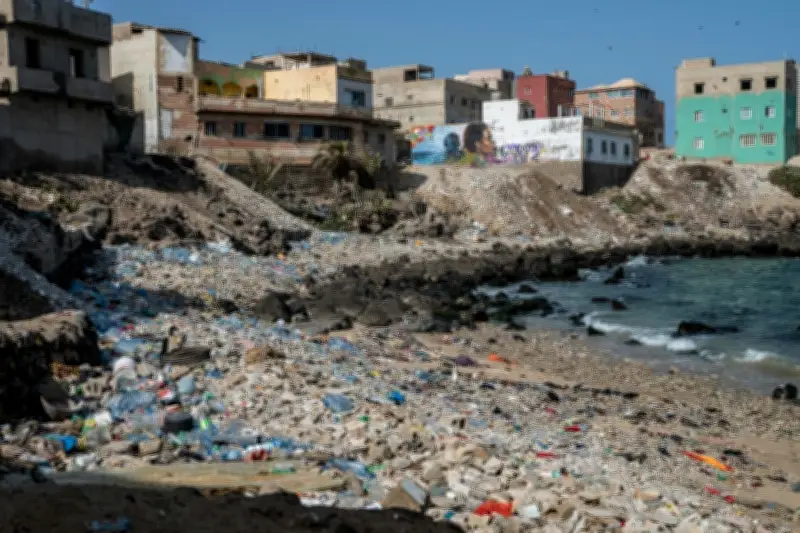
Each year, 52.1 million tonnes of plastic waste enter the ocean, contributing to an estimated 24.4 trillion microplastic particles. These particles affect over 4,000 marine species. The report calls for reducing plastic production, an issue stalled in international negotiations.
Deep-Sea Mining Concerns
The report highlights growing concerns about deep-sea mining, urging a coordinated international response. While exploration is advanced, no commercial production has begun. Critics warn that waste and noise from heavy machinery could disrupt marine life and migrations. Greenpeace called the report "an urgent wake-up call to governments."
Trump Administration's Ocean Cuts
The WOA comes as the Trump administration plans to remove hundreds of deep-sea scientific instruments used for a decade to monitor climate change effects. Ian Butler, an Australian marine ecologist and joint coordinator of the WOA expert group, said, "The deep ocean monitoring system is extremely important for global understanding. Its removal would leave a huge gap in long-term ocean science."
The report underscores the need for a new relationship with the ocean, grounded in science, international law, and shared responsibility. UN Secretary-General Antonio Guterres stated, "We cannot keep treating the ocean as limitless."