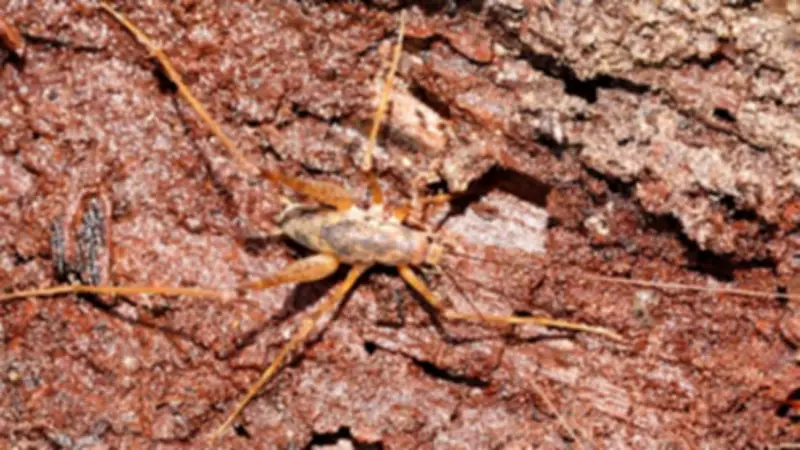
When you picture a cave, you likely imagine a lifeless environment. However, most caves on Earth are teeming with life. Caves maintain consistent underground air temperature and humidity, making them ideal refuges for species that cannot tolerate surface fluctuations. Ecologists view caves as evolutionary time capsules, preserving troglofauna—small animals that live primarily or entirely in caves—that might have perished during ancient climate shifts.
Australian caves host many such species, including blind fishes, blind eels, and even blind wasps. Among the most peculiar are cave crickets. These spindly, spider-like insects differ greatly from common backyard crickets: they cannot chirp and are flightless. Due to their limited mobility, all Australian cave cricket species are endemic, meaning they are found nowhere else on Earth.
When pioneering entomologist Aola Richards retired in the 1980s, only 23 cave cricket species were known in Australia, and research stagnated. Now, a recent study has identified three new species, with more expected. One species honors Richards, while another incorporates a Gundungurra word—a first in Western scientific naming.

Underground Room Service
Cave crickets are often mistaken for spiders due to their long legs and antennae, but they are harmless. They thrive in cool, dark, humid environments like caves and play a critical ecological role by leaving the cave. At night, these scavengers exit cave entrances to forage above ground, feeding on vegetation, insects, and other organic matter. Food is scarce in caves, so cave crickets are vital: they serve as prey for other species, and the nutrients they bring back and excrete provide essential sustenance for bats and other cave dwellers. Essentially, they act as cave room service.
How We Found and Named Three New Species
Despite the uniqueness of Australia's cave crickets, research had been minimal since Richards' retirement. She was responsible for naming almost all cave cricket species in Australia and New Zealand. Based on fieldwork and citizen scientist observations, the team suspected more undiscovered species existed.
Working with experienced cavers, they collected crickets from cave entrances and abandoned mineshafts in Victoria and New South Wales. In the lab, they examined dozens of specimens, comparing physical traits with known species to identify three distinct types within the Speleotettix genus. DNA sequencing confirmed their uniqueness, as tiny differences in base pairs reliably distinguish species.
Finding a Name
Naming a species is a lengthy process with conservation implications. Without a formal name, species are ineligible for protection under Australian environmental laws. The researchers chose the names Speleotettix aolae, S. binoomea, and S. palaga. The first honors Richards' contributions; specimens she collected 60 years ago were crucial for understanding distribution. S. aolae and S. palaga were found in Victorian caves and mineshafts, while S. binoomea inhabits the World Heritage-listed Jenolan Caves and surrounding systems in NSW. The name palaga is Latin for gold ingot, alluding to the disused gold mine where it was found.
First Gundungurra Word in a Species Name
The Gundungurra people are the Traditional Custodians of the Jenolan Caves. The species found there was named Speleotettix binoomea, with binoomea meaning “dark places” in Gundungurra, referring to the caves. Working with Gundungurra Elder Aunty Sharyn Halls and the Jenolan Caves Reserve Trust, the name recognizes the deep cultural link between the species, the caves, and their custodians. This is the first known use of a Gundungurra word in Western scientific naming.

Thousands of Australian Species Still Without Names
Australia and New Zealand host an estimated 225,000 insect species, most of which are understudied. Only a third of insect fauna has been formally named, and many remain unknown to science. Currently, fewer than 30 Australian cave cricket species are formally described, but field collections and genetic analyses suggest the true number is at least double. Formal naming is the first step toward protection, allowing scientists to assess extinction risk and implement conservation measures. As climate change brings drier, hotter conditions into caves, species like cave crickets—which can quickly desiccate—face existential threats. This research aims to revive interest in Australia's cave crickets and mark a crucial step toward protecting these strange animals.