Doctors treated patients in tents set up under a scorching Philippine sun on Tuesday, including helping a young mother give birth, as the death toll from a major earthquake that collapsed buildings topped 40. The magnitude-7.8 quake struck off the southern island of Mindanao on Monday, leaving thousands displaced and more than 450 injured, according to national and local disaster agencies. Four people are now believed missing.
Hardest-Hit Areas
In Sarangani province, the hardest-hit area, some locations remain accessible only by helicopter, while fears of aftershocks are slowing rescue efforts, local officials said at a Tuesday briefing. "There are still aftershocks, so the rescuers are very cautious in their approach. That's a challenge," said regional civil defence chief Rodrigo Sosmena. A series of powerful aftershocks rocked the area from about two hours after the first quake, followed by hundreds of tiny tremors.
Infrastructure Damage
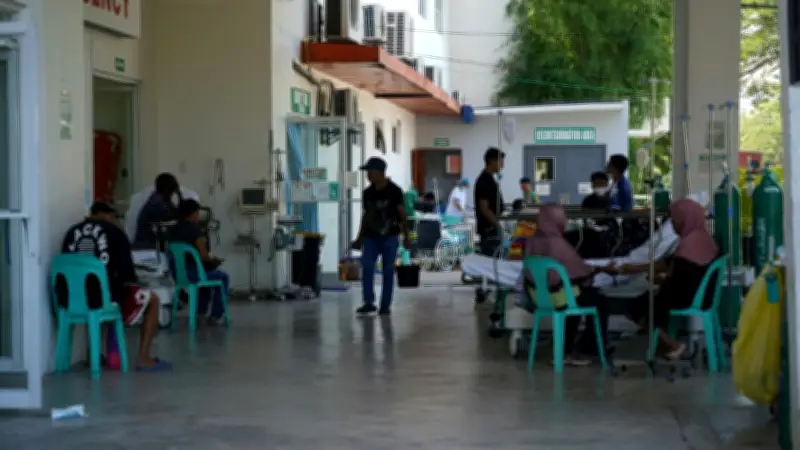
Infrastructure damage means some communities will be cut off for at least a week due to damaged roads and a collapsed bridge. At a hospital just outside General Santos, the region's largest city, AFP reporters heard cries of "push" then an infant's cries as a mother gave birth outdoors behind a makeshift screen. In Glan municipality, where at least 13 people were buried in their homes by a landslide, staff at another hospital told AFP more than 60 patients were on beds outside the facility due to fears for the building's structural integrity. "The hospital sustained a lot of damage," a staff member said. "The municipal engineer decided we could not use the building." As of Tuesday afternoon, the death toll from provincial sources contacted by AFP stood at 41.

Residents' Stories
Residents described scenes of terror during the earthquake, with many saying the area was no longer safe enough to call home. "I think everything needs to be demolished," casino worker Eduardo Gutierrez Jr. said after returning to his apartment to retrieve belongings now covered in mud. "When I got out the door, the entire apartment row was swaying," he said. "We saw walls collapsing, the floors opening up. And then water and mud began spurting up from underneath the flooring." Rosalynne Singson told AFP the earthquake had left her "no choice" but to move. "It's hard to accept. (Our house) probably needs to be demolished, because we were told we're on top of a faultline," she said. "It's really back to zero." At the hospital outside General Santos, Lourdes Camia said she believed her brother-in-law, who was being treated for a heart attack, was safer outside despite the heat. "I can see the cracks (of the wall) from here," she said. "If there is another quake, I'm scared the hospital will collapse."
Recovery Efforts
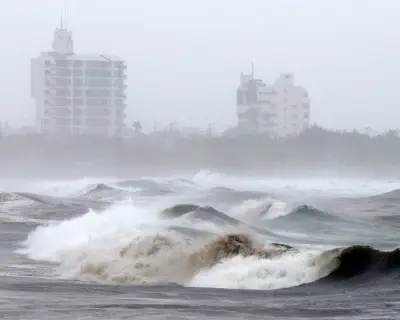
On Tuesday morning, rescuers at the ruins of a neighbourhood grocery resumed efforts to recover two store employees who were inside when the building crumpled. AFP journalists saw rescue dogs and their handlers scour the pile of broken concrete and jagged metal bars. One rescuer told reporters the effort was now one of recovery rather than rescue, though a more senior official later insisted that a formal decision had yet to be made. At a nearby beach resort, a high-speed Coast Guard vessel searched for two people still missing after swimming in waters that churned violently as the quake struck. Videos posted to social media and verified by AFP on Monday showed the catastrophic collapse of a shopping centre in General Santos and an unoccupied school building crumpling. In another video, young schoolchildren could be seen screaming in the arms of their teachers as the quake violently swayed them back and forth on the ground. The earthquake saw thousands of people ordered to evacuate coastal areas of the southern Philippines and neighbouring Indonesia as tsunami warnings were issued by multiple countries and a regional warning centre. But by midday Monday, the threat had passed and the alerts were cancelled.