Finland is on the verge of making history as the first country to permanently bury radioactive spent nuclear fuel deep underground. The Onkalo repository, located in Eurajoki, southwest Finland, is carved into 1.9 billion-year-old stable bedrock and is nearly ready to begin operations.
World's First Permanent Repository
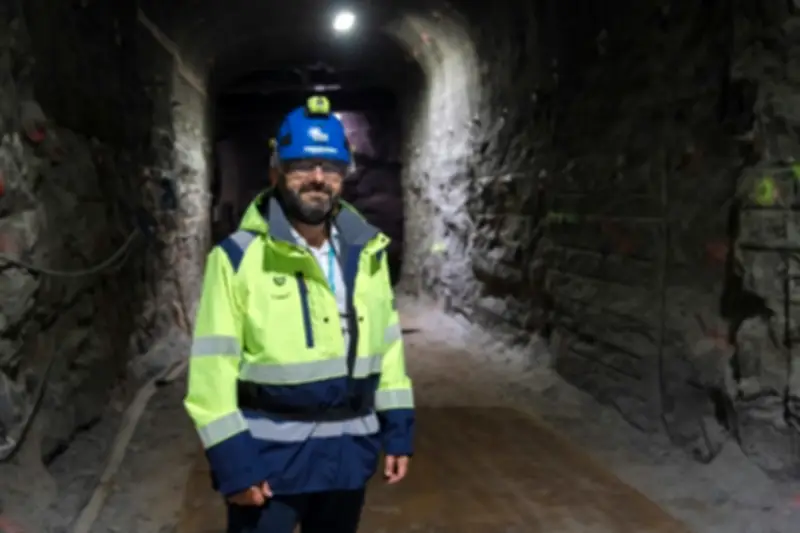
The elevator display reads "433," indicating the depth in metres below ground. As the doors open, visitors are greeted by the entrance to what is expected to be the world's first permanent geological repository for spent nuclear fuel. Named Onkalo, which means "cave" in Finnish, the facility aims to provide a long-term solution for the dangerous by-products of nuclear energy.
Countries have grappled with the challenge of managing nuclear waste since the first power plants were built in the 1950s. Currently, most spent fuel is stored in temporary facilities. While final repositories are under construction in Sweden and France, Finland is poised to be the first to open an underground storage solution.

Regulatory Approval and Timeline
The Finnish Radiation and Nuclear Safety Authority (STUK) is expected to issue its final assessment in June, after which an operating licence can be granted. Philippe Bordarier, chief executive of nuclear operator Teollisuuden Voima Oyj (TVO), expressed optimism: "We hope we can start the operation either at the end of this year or most probably at the beginning of next year."
The first waste to be deposited will come from the nearby Olkiluoto power plant, where spent fuel is currently cooled in water pools at an interim storage site. Onkalo has a capacity of 6,500 tons of uranium, designed to accommodate waste from Finland's five nuclear reactors, three of which are located in Olkiluoto.
Construction and Cost
Nuclear waste management company Posiva began construction of the site in 2004, with the total cost now estimated at one billion euros ($1.16 billion). The facility features a massive network of tunnels where spent fuel will be deposited over a planned 100-year period, with the possibility of extension if new reactors are built. After that, the vault will be sealed to ensure safe storage for at least 100,000 years.
"Basically, it needs to be safe forever," noted Lauri Parviainen, a chemist at Posiva who guided reporters through the facilities. The fuel will remain highly radioactive for tens of thousands of years, but after 100,000 years, its radioactivity will be comparable to that of natural uranium ore.
Encapsulation and Sealing Process
Above ground, the spent fuel will be sealed in highly corrosion-resistant copper canisters. These canisters will then be lowered into holes drilled in the tunnels, which are subsequently filled with bentonite clay to create a secure seal. "So if the bentonite stays in place, we are safe," Parviainen explained. Once each 300-metre-long disposal tunnel is filled, it will be sealed with a steel-reinforced concrete plug.
Long-Term Risk Assessment
Jarkko Kyllonen, an expert on nuclear safety at STUK, has evaluated risk scenarios for the Onkalo project extending up to a million years into the future. He emphasised that the first 10,000 years are critical for maintaining the integrity of the capsules. The main long-term risks include corrosion of the copper canisters and earthquakes during future ice ages, which could potentially damage the capsules and lead to radioactive leaks. However, the results of various risk assessments have been positive.
While similar projects in France have faced strong opposition, Onkalo has garnered broader support in Finland. Matti Kojo, a social sciences professor at Lut University, noted that although there was local opposition when the plans were first introduced in the 1970s, "people have gotten used to it and they trust the assessments made by STUK." He added that support for nuclear power is currently at a historically high level in Finland.
Environmental Concerns
The Finnish Association for Nature Conservation remains critical, arguing that nuclear waste poses a long-term, serious risk. Director Tapani Veistola stated, "No one can guarantee the safety of Onkalo for thousands of years."

Finland's Nuclear Policy
Under Finnish law, all nuclear waste produced in the country must be deposited within its borders. Climate and Environment Minister Sari Multala explained that before a legal change in 1994, spent fuel was exported to countries like Russia. The right-wing government has prioritised increasing nuclear power, and Finland is considering the development of small modular reactors (SMRs). How the spent fuel from future SMRs will be managed has not yet been decided, with an assessment expected by March next year.