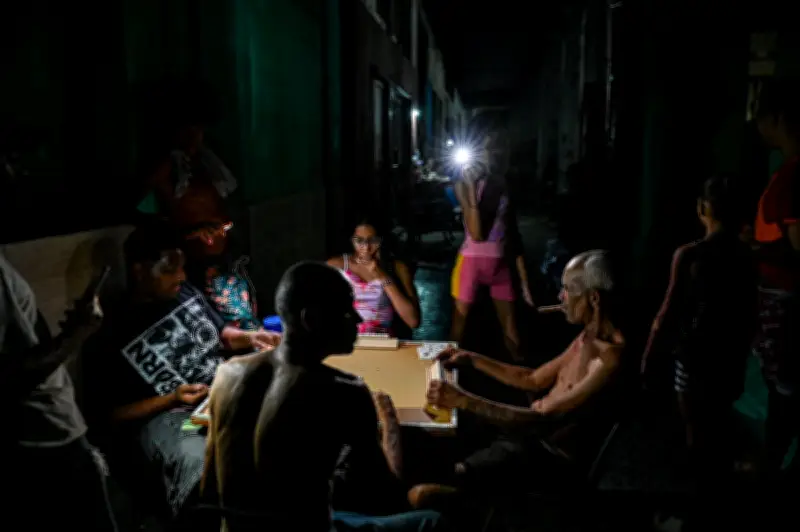
In the heart of Havana, residents endure endless rolling blackouts that have become a nightly ordeal. People play dominoes by the light of cellphone flashlights, while others take to the streets banging pots and pans in protest. The situation, once confined to rural areas, now grips the capital as the US oil blockade enters its fourth month.
A doctor sitting on his apartment stoop in the Vedado neighborhood described four days without electricity. "Without electricity, water is also a problem. And there are mosquitoes everywhere," he said. The cacerolazo protests have become commonplace, echoing through dark streets as Cubans express their frustration.
Fuel and Power Crisis Deepens
Three weeks ago, Energy Minister Vicente de la O announced, "We have no fuel, no more reserves." The state electric company struggles to provide even a few hours of power daily. Petrol stations have been empty for months, and cooking gas canisters are now priced at US$29—a stark contrast to the few cents they once cost from the state. Many Cubans have turned to charcoal and wood for cooking.

Martha Pérez, a resident of the Bahía neighborhood, said her monthly pension, eroded by hyperinflation, is worth less than $10. Some of her neighbors who protested were taken away by police. With temperatures reaching the mid-30s Celsius and 75% humidity, the lack of electricity for fans leaves many sleepless.
US Sanctions Intensify
In Washington, frustration grows that Cuba's government refuses to collapse under pressure. On Thursday, new sanctions targeted President Miguel Diaz-Canel, his family, and several Castro family members. The USS Nimitz aircraft carrier arrived in Jamaica, south of Cuba, while surveillance aircraft circle the island. CIA Director John Ratcliffe reportedly brought the "operator" responsible for killing 32 Cuban security guards in a Venezuelan operation.
Major hotel operators like Iberostar, Blue Diamond, and Melia have scaled back or severed ties with Cuba, dealing a blow to the tourism sector. Canadian nickel miner Sherritt initially pulled out but now seeks to sell a majority stake to a former Trump adviser. Cuba's state bank announced Visa and Mastercard will no longer work, though this affects businesses more than average Cubans.
Economic Strain and Uncertainty
Felix Capote, a businessman buying supplies at a Mipyme grocery store, expressed worry that soon these private enterprises won't have food. Two shipping companies carrying 60% of goods entering the island have suspended new orders. Michael Bustamante, chair of Cuban and Cuban American studies at the University of Miami, said negotiations between the US and Cuba are going nowhere. "Both sides just seem dug in as all hell," he noted.
Bustamante believes the only hope is for the Cuban government to make big concessions. "Otherwise Washington may bring about their exit by force anyway, with untold consequences," he said, adding that Washington looks "primed to sweep up assets for its friends in a nakedly imperial way."
Preparations for Conflict
The Cuban government is preparing for an attack, which Diaz-Canel said "will cause a bloodbath with incalculable consequences." Anti-aircraft radars have been spotted around Havana, and national television shows soldiers training. Cuba's defense strategy relies on a "war of all the people," but experts say this is no longer realistic given antiquated military equipment. Hal Klepak, professor emeritus at the Royal Military College of Canada, noted that morale remains high in the regular force, but reserve forces have atrophied due to lack of equipment, money, and petrol.
As the World Meteorological Organization forecasts an extremely hot and dry summer in the Caribbean, the lack of electricity could prove deadly. When asked who he blamed for the situation, the doctor in Vedado simply held out his hand and said, "Thanks for listening to me."