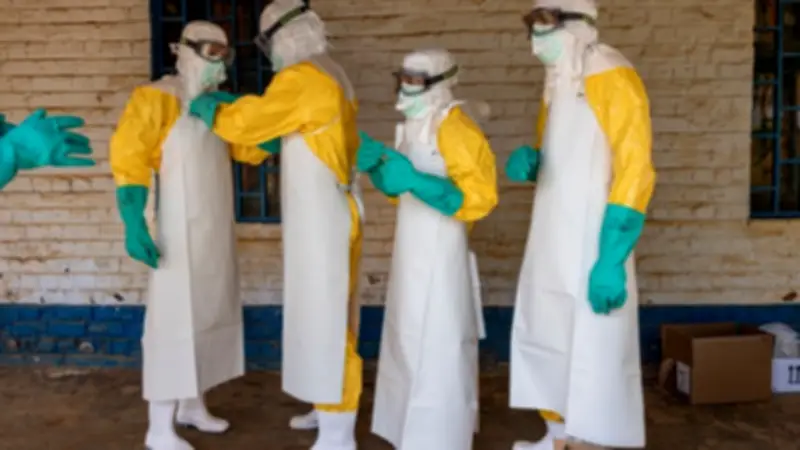
Experts have weighed in on whether the current Ebola outbreak in the Democratic Republic of the Congo could escalate into another global pandemic, as concerns rise over the spread of the virus.
Last week, the World Health Organisation declared the Central African outbreak a "Public Health Emergency of International Concern." Currently, there have been 344 confirmed cases of Ebola in this outbreak in the Democratic Republic of the Congo. The virus has spread to further regions, and 15 cases have been confirmed in the neighbouring country of Uganda.
This Ebola outbreak is unlike most others, stemming from the Bundibugyo strain, which currently has no vaccine or approved treatment. The Congo has recorded 60 confirmed deaths from the outbreak.

Experts told SkyNews.com.au that, as it stands, the risk of a global pandemic or Ebola reaching Australia is unlikely. Unlike COVID-19, the nature of the virus makes it much harder to spread, they say.
Key Differences from COVID-19
Deakin University Chair of Epidemiology Professor Catherine Bennett said Ebola is fundamentally different from other pandemic-inducing viruses like influenza or COVID-19. "It's a different story because people get infected by direct contact, so it's not airborne transmission; you've got to have contact with bodily fluids," Professor Bennett told SkyNews.com.au. "So usually, it's treating doctors or family members, carers, or people handling the deceased, and that means it's less likely to spread amongst people on a plane, for example."
Professor Bennett noted that Ebola is only infectious once symptoms begin to show, which is "a big thing for control." "If you find contacts and they're not sick, they don't have any symptoms, then you know they haven't infected anybody else yet, and you can get them into isolation before their infection," she said. "That wasn't true with COVID."
Low Risk to Australia
Infectious diseases physician Dr Sanjaya Senanayake reiterated this point. He said Australia, which has never recorded a case of Ebola, is in a "fortunate position" when it comes to the risk of spread, thanks to the lack of traffic from Central Africa. "The chance we're getting it here is much less likely," Dr Senanayake told SkyNews.com.au. "I think it is still important to be vigilant and to make people aware if they're coming from that part of the world to let health authorities know if they start to get sick."
Symptoms of Ebola are similar to many other, far less serious illnesses, including muscle aches, pains, and fever. The United States and Uganda, among other countries, have closed borders to travellers from the Congo.
Professor Bennett said travel bans are not necessary for Australia and that the focus should be on screening people. "A lot of the people in the areas that are exposed are more likely to be travelling to other parts of Africa, not travelling to the other side of the world," she said. She added that pre-screening individuals before boarding a plane is more effective, along with effective public communication, rather than an outright ban on all flights.
Health Minister Mark Butler voiced the same reasoning in a press conference on Monday, assuring Australians that there are protocols in place. "There are pretty long-standing protocols here, particularly around the border where people are coming back from affected regions; they are watched very closely on the flight, particularly for any symptoms," Mr Butler said. "They are given information about monitoring their own symptoms and what to do in the event that they experience symptoms that would indicate the need to be tested."
Challenges in Controlling the Outbreak
For the experts, controlling the virus at the source is the most important step to preventing any global spread, but it is providing many challenges. The area faces political unrest, with attacks on the region from militia, displaced citizens, and a distrust of medical aid, while dignified burials of the deceased are further spreading the virus. The outbreak's patient zero has still not been identified, which makes it hard to track the virus and who may potentially have it.

"That's where things are a bit out of control at the moment; that doesn't mean we can't rectify the situation, but it's going to be challenging," Dr Senanayake said. The Congo successfully controlled multiple outbreaks in the past, including the Bundibugyo strain in 2012.