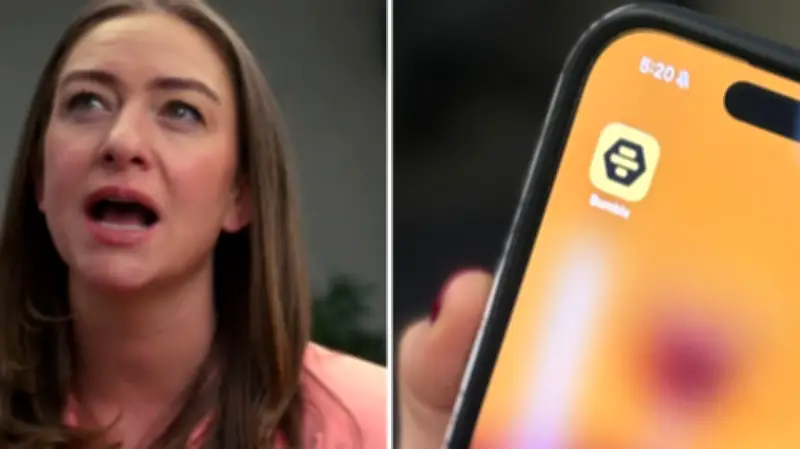
Would you trust a robot to find your soulmate for you? That is exactly what Bumble plans to do with its new matchmaking capabilities after research found 70 per cent of people would consider using artificial intelligence on a dating app if it helped them find the right person faster.
The popular app, renowned for being the only major dating platform that prompts women to message first, is introducing a radical new feature called 'Dates, powered by Bee'. Instead of traditional swiping, the feature prompts members to start a private conversation with a robotic 'wingman' about their values, relationship goals, and what they are looking for. Bee then identifies a highly compatible profile and, if the interest is mutual, the connection moves to a live conversation and hopefully, a real-life date.
Bumble CEO Says Goodbye to the Swipe
Bumble's CEO Whitney Wolfe Herd shared that the company is saying goodbye to the swipe. "From day one, Bumble has been about empowering people, especially women, to make meaningful connections on their own terms," she said. "With Dates, powered by Bee, we are fundamentally rethinking not only how people connect, but also why."

She added that the feature is about using AI thoughtfully to help cultivate deeper connections and eliminate dead-end conversations and endless swiping. However, relationship experts and singles alike are yet to be convinced.
The Problem with Outsourcing Love
This dramatic technological shift comes at a time when people are experiencing widespread app fatigue and a dating culture that is described as "far too casual and nonchalant". "One of the most common complaints I hear is the sheer time people spend scrolling and swiping before even securing a match," dating expert Suzie Kim told news.com.au.
However, Ms Kim warns that automating your love life has its downsides too. "A profile tells you a lot if you know how to read one — the language and photos they choose, what they include and what they leave out," she explained, noting that handing this critical vetting process to a bot can feel like a "loss of agency and control". For women in particular, reading between the lines of a profile is crucial to assessing physical risk before agreeing to a date.
Safety Concerns and False Security
Ms Kim warns that an automated process could inadvertently create a dangerous "false sense of security," making it easier to bypass red flags and access unsuspecting matches. Beyond the safety risks, she believes that an algorithm can never really replace the crucial, "messy human trial-and-error" required to predict true chemistry. "It is part of the point in dating and relationships," she shared. "It is only from actually interacting and dating that you find out who you are in the context of a relationship — your patterns, triggers, capacity for connection."
Protecting Human Connection
Despite these concerns, Bumble says its broader shift to an AI-driven ecosystem remains focused on enhancing real-world chemistry, rather than replacing it. The tech giant clarified that the new Bee feature is in addition to the app's broader move away from swipe culture, which will debut later this year.
In a recent statement, the company's CEO pushed back against fears of a robotic future, noting that while the tech world is increasingly moving toward "artificial intimacy," Bumble seeks to do the opposite. "The next chapter of AI should not be about replacing human connection, it should be about strengthening it," Mrs Wolfe Herd shared. "The best AI should work quietly in the background so real people can show up fully in the foreground."
Testing and Future Rollout
The new matchmaking feature is currently being tested exclusively in New York City to refine the algorithm before a wider release, with timing around a global expansion, including to Australia, remaining unclear at this stage. But one thing is for certain – the dating climate is shifting whether we like it or not, signalling that the era of endless swiping might finally be coming to a close.