A naval defence expert has called for calm after critics trashed Canberra's plan to buy three second-hand Virginia-class submarines from the United States, with claims Australia is being shafted in the latest AUKUS shake-up.
Expert's Perspective on the Submarine Shift
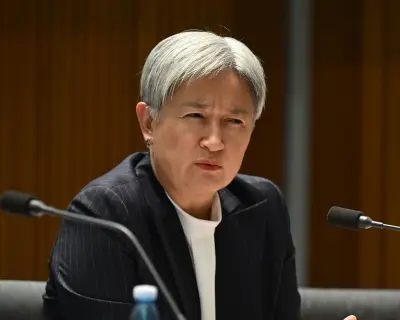
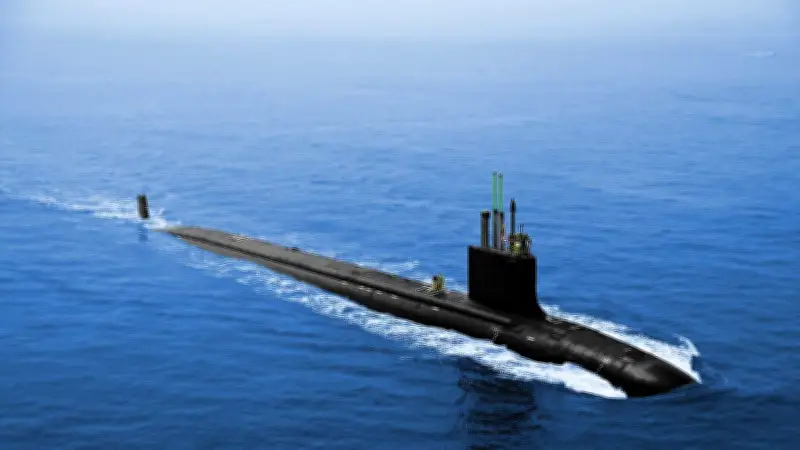
Former Royal Australian Navy officer Jennifer Parker said the move to purchase three used submarines instead of a mix of new and used vessels would simplify operations and ensure the high-tech kit is in Australian seas sooner. At the weekend, Defence Minister Richard Marles announced the government was scrapping plans to buy at least one new Virginia-class sub under Pillar I of the AUKUS defence pact. The government was originally meant to purchase two used subs and one new one in the 2030s but is now electing to buy all three second-hand subs.
Speaking with news.com.au, Ms Parker noted that while it was never clear what capabilities the new sub would have had, it certainly would not have included an increased missile payload, known as the Virginia Payload Module, because it was too expensive to install. "We don't need to have the best of every capability. We need to get ourselves into the nuclear-powered submarine game as a priority. We don't need to have the best of the best. The current block four nuclear-powered submarine is way better than any other attack submarine in the world right now and it will still be in the 2030s when we get it," she said.

The defence expert added that the used fleet would not need to be decommissioned until 2058, giving AUKUS allies suitable time to develop a new fleet of nuclear submarines known as the SSN-AUKUS. "That is a long time from now and so much can change in terms of technology. We should have built SSN-AUKUS by then," Ms Parker said.
Cost and Operational Benefits
Ms Parker also highlighted that buying three identical submarines would drive down costs because Canberra would save money in training and maintenance expenses. She said using new subs would require a longer lead time. "It comes with more trails introducing it, making sure it's safe for sea; a longer lead time to becoming operational," she explained. "Yes, the downside is there is less life in the used subs, but the upside is there is reduced risk."
Criticism from Former Senator
Former South Australia senator Rex Patrick, however, described the decision as "a coming of truth." He told 2GB's Ben Fordham: "For the past three years, anyone who has bothered to look into the US submarine industrial base has known that we were never going to get Virginia-class submarines for the Royal Australian Navy. This is the first crack in the dam and what a very expensive facade."
The former submariner said there was "no pathway" to boost the US submarine building capacity to the 2.3 ships per year required under the AUKUS agreement, noting that shipbuilding was stuck at a stubborn 1.1 subs per year. He also claimed Australia has spent $2.8 billion boosting the US submarine building capacity and there was no way to claw that money back. "There's just bad news sitting in all of this. It's not something to someone paying attention is surprised at," he said.
Defence Expert's Rebuttal
Ms Parker said questions about the US submarine building capacity were a "different conversation" and urged Australians to view the funds being spent as a "downpayment" on a future submarine. "Remember the end state of AUKUS is not three Virginias in the 2030s. The end state is the US, UK and Australia increasing their submarine industrial capacity by being able to build submarines in all three countries. The Virginia-class in the 2030s is just a stop-gap. Think of the crawl, walk, run analogy. It's the walk to get us into the nuclear game before we start producing our own," she said.

Ms Parker added that the US may still choose to sell Virginia-class submarines to Australia even if it does not meet its own shipbuilding goals, noting that Western navies are shifting their focus to develop new underwater unmanned drone capacity. "It's 2026 right now. We are investing in those two submarine industrial bases. AUKUS continues to be on track. This conversation has become, in many ways, of what ifs and if we don't know the answer to every single what if now, it's obviously a failing. That doesn't make a lot of sense," she said. "If we got to the 2030s and Australia did not get submarines from the US, then there would be a discussion about what the financial implications are and they would have a conversation around that. That is not where we are."
Government's Rationale
On Saturday, Defence Minister Richard Marles told reporters at the IISS Shangri-La Dialogue in Singapore that Australia would no longer buy any new submarines but purchase three second-hand subs from the same production block. He said the move would simplify Australia's naval fleet. "We had the prospect of almost having four classes of submarines operating at the same time: the last of the Collins Class, two in-service Virginias, a brand new Virginia, and a brand new SSN-AUKUS. That gets pretty complicated," he said. "What we will have here is a simpler pathway. The Virginias we are acquiring will all be of the same type and I can't overstate the significance of that."
The AUKUS defence treaty, struck between the US, UK and Australia, promised Canberra eight state-of-the-art nuclear-powered submarines, called SSN-AUKUS, by the late 2030s, with some built in Australian shipyards. Under the agreement, Canberra would get three to five older subs while the SSN-AUKUS class is being built.