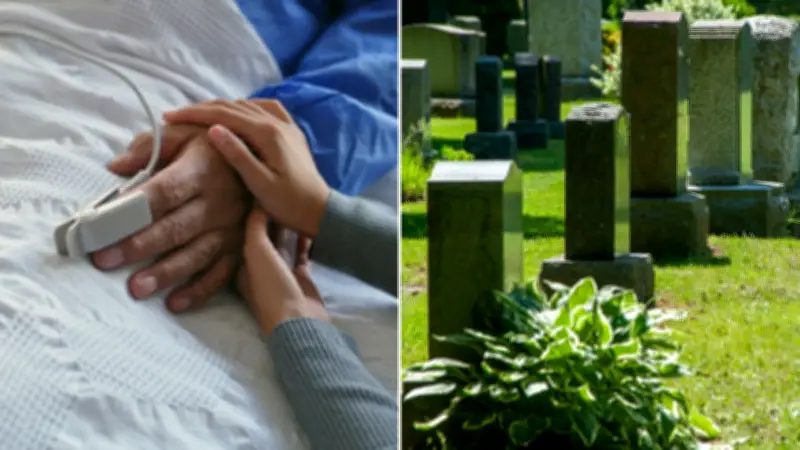
A powerful similarity in our dying moments has been brought to light, revealing that the most common last word people say before they die is "mother." Despite the many different forms and locations of death, there is a striking commonality reported in hospitals, palliative care units, and historic battlefields worldwide.
Universal Call for Mother
Regardless of language or cultural background, the most frequent experience in death is a person calling out for their mother. A landmark study by neurobiologist Dr. Christopher Kerr tracked over 1,400 patients in New York over a decade. His data showed that more than 80 percent of patients experienced vivid comfort visions, known as end-of-life dreams and visions, and the person they reached for was the parent who raised them—often their mother, even if she had been deceased for decades.
Paramedic's Experience
Former Australian paramedic Nikki Jurcutz, now owner of Tiny Hearts Education, shared on Instagram that she heard dying patients call for their mother several times during her eight-year career in Victoria. "I heard it myself a handful of times, and those moments have stayed with me for years," she said. "It's been reported in soldiers dying on battlefields, in hospices, and in palliative care, across different countries and different decades, in every language. That's what makes it so amazing. It's not tied to one type of person or one part of the world. It seems to be something in all of us."

One particular moment with an elderly woman who passed away while she was on a job still resonates with her. "When she said it, it didn't sound like she was calling out for her mum. It sounded like a statement, almost like she was seeing her. Like the two of them were being reunited rather than her reaching for someone who wasn't there. I will never forget that moment."
Social Media Reactions
Many commenters on Jurcutz's post shared their own experiences. One revealed: "My dad did this in palliative care. He was in so much pain, even in his sleep, that he called out for his mum. We found comfort in the idea that perhaps nana was there to take him home." Another wrote: "I'll never forget my Nanna calling out for her Mum in her final moments." A third shared: "When my older brother died from a drug overdose, even though him and my mum lost contact for years, he still called out for her during his final moments."
Others reflected on their own experience as mothers, remarking on the powerful insight. "Reading those was the moment it really hit me. This isn't just something I saw on the road. It's something so many people have quietly lived through with the people they love, and it's the same every time," Jurcutz said. "To me that's a reminder of how special the role of a mum is. You're the first safe place your child ever knows, and you stay their safest place right to the end."
Palliative Care Perspective
Thea McCroary, who has worked in palliative care for 18 years, believes there is a lot of grace in our final moments. "You go back to some of your happiest memories," the COO of Prestige Inhome Care said. "It shows right up until the very end that people, and mothers in particular … are still caring for others." She notes that watching a loved one call out for their mother can aid in the grief for those left behind. "Families are fearful of losing them, but there's some comfort knowing they have someone with them, or that they're feeling connected to their mum."
McCroary believes that the act of calling out for a loved one is a reminder of what is important. "You don't ever hear anyone saying they wish they worked more. When it strips back at the end, the last words are often about who they loved and who loved them in return."