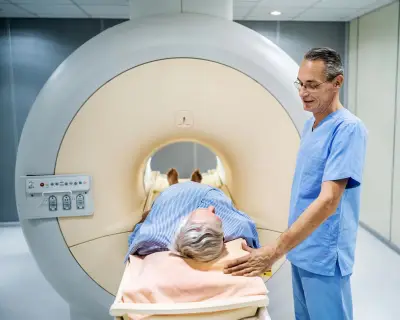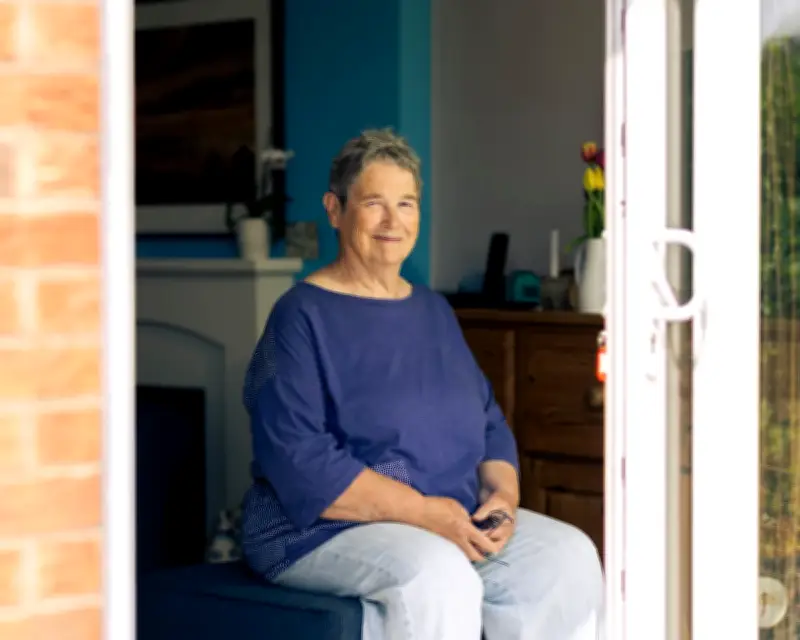
Few things are more feared than a dementia diagnosis. Now people living with the condition are fighting against damaging stereotypes and demanding proper medical support.
When Maxine Linnell, 78, a retired psychotherapist living in Leicestershire, learned that she had dementia four years ago, the diagnosis proved less challenging than some people's reactions. "What was striking was how many people's attitudes changed almost immediately … they stop seeing you as a person and see only dementia, some professionals included. Like this is the end and everything after will be devastating."
The assumption that you go overnight from diagnosis to late-stage dementia isn't confined to family and friends. Julie Hayden, a nurse and social worker from Yorkshire, was diagnosed nine years ago at the age of 54, long after sensing that something was wrong but being constantly told that it was depression or menopause; her doctors still associated dementia with old age and didn't consider that she might have had young onset. "At the point of diagnosis," she recalls, "most of us are told: 'Well, it's dementia, nothing we can do about that. Best go away and get your end of life affairs in order.'"

George Rook, an ex-teacher living in Shropshire, was given three pieces of similar advice (all three of which he's broken) when he was diagnosed in 2014, at the age of 63. "First, don't take risks. Second, don't get tired. Third, prepare. Don't take risks is just an absurd thing to say. You don't take stupid risks, but you take risks just by living. [There was] no encouragement to continue to socialise, keep active, learn new things, volunteer."
People diagnosed with dementia are still routinely being advised to disengage from life as they know it and prepare to die – something that Kate Swaffer, an internationally known Australian dementia campaigner, calls "prescribed disengagement" – or given a bunch of leaflets, without any genuine support beyond groups in which many people living with dementia feel patronised.
After diagnosis, Swaffer immediately lost her job. So, too, did Hayden.
Linnell, Hayden, Rook and Swaffer are all dementia activists, people living with dementia who are angry about the stereotypes surrounding the condition and the lack of support after diagnosis. It is a hybrid of ageism and ableism that combine, they believe, to perpetuate fear and anxiety.
Instead of disengaging, they choose to engage even more vigorously: all four have thrown themselves into dementia activism, establishing new groups (in Hayden's case, the Young Dementia Network; in Swaffer's, cofounding Dementia Alliance International) or becoming active members of existing ones, like Deep (the Dementia Engagement and Empowerment Project), a network of people with dementia across the UK. All of them, "experts by experience", are actively involved in research projects such as Living Well With Dementia. Swaffer is doing a PhD.
Certainly, dementia has become the most dreaded condition of our age; a receptacle for all our phobias about ageing and dying. Recent research found that half of people in the UK now fear dementia more than any other health condition.
Before she was diagnosed herself, Linnell had friends and relatives who lived, and died, with dementia. She noticed that, when someone was struggling for a word, other people would immediately step in to say: "Oh, but I forget things all the time." (I think back ruefully to how often I've reacted this way.) "That made me aware how deep this anxiety is," she says. "There's this shame about forgetting a word and reassurance needed among almost all of us."
One reason for the extent and depth of the anxiety is how rarely we tend to see or hear from people actually living with dementia. Instead, its depictions almost invariably feature either carers talking about the burden they carry, neuroscientists searching desperately for a cure, or advice about how to "prevent" it – all of which amplify the fear, with the prevention (with its list of things each of us should be doing) adding more than a whiff of victim-blaming.

When we see people living with dementia in popular culture, they're almost always at a later stage, and conforming to stereotype (think of the confused, wandering, white-haired elderly person) – despite some more complex recent storylines such as the character of Nigel Bates in EastEnders, a rare depiction of young onset dementia. For the dementia activists I interviewed, the single worst reinforcer of stigma and fear was the 2024 Alzheimer's Society ad, The Long Goodbye, with its strapline: "With dementia, you don't just die once; you die again and again and again."
Hayden was one of 10 activists in a steering group that the Society asked to preview the ad. When all 10 responded that it was irresponsible and would devastate anyone newly diagnosed, they were ignored. Linnell was so disturbed by the ad that she started a petition, titled: "Stop negative and inaccurate dementia publicity. Show the hopeful, creative possibilities."
In it, she argued that: "Alongside my dementia, I lead a fulfilling life and actively contribute to my community. I'm not alone in this; countless others diagnosed with dementia live meaningful and active lives. Some do that for many years after diagnosis. We may need help and support, and we will need to adapt our lives … We have a voice, and we need that voice to be heard."
The Alzheimer's Society, in response, says: "The aim of The Long Goodbye advert was to show the unvarnished, devastating reality of dementia and to raise awareness and understanding among the public. For too long, the hard reality of living with dementia, especially in the latter stages, was hidden from view, making families going through it feel unseen, unrepresented and unsupported … We believe we would be doing those who are affected by dementia a disservice if we were to sugarcoat the reality they face every day."
Don't they have a point? Aren't the dementia advocates exceptions and, in denial, disavowing their future selves? After all, most of us know (or know of) incontestably tragic late-stage cases like the one in the ad – the mother who can no longer recognise her partner or children. Even this doesn't mean a life without quality or meaning. The person with dementia can still be loved and cared for, and even find joy.
Dementia activists certainly don't need reminding about what the later stages look like. "As activists, we're very aware that there are people much further along the line than we are, who perhaps have lost their voice," says Hayden. "And we're constantly campaigning with and for them." Hayden herself was involved with St Andrew's Healthcare in co-creating care plans with carers and the involvement, as far as possible, of the person diagnosed. This is now being rolled out across a number of care homes.
Their chief argument is that late stage, as depicted in the so-called "tragedy narrative", isn't the only dementia story around, although it's often portrayed as such: they want to expand the range of images, not replace one with another. They're also frank about the challenges they face. Hayden, like Rook, has problems with balance, and uses a wheelchair. Stress can have a big impact. Swaffer and Linnell both temporarily lost language; Swaffer when her house recently flooded and Linnell when moving house. Numbers and dates can prove elusive.
At the same time, Hayden believes her activism has served as a kind of "mental gym", helping her develop "new neural pathways". Swaffer says that new learning in her case aligns with the evidence on neuroplasticity that, with stimulation, the brain will keep trying to find new connections around the damage from dementia. Linnell goes further, arguing that prescribed disengagement "may hasten what people are expecting to happen … If we all learned how to adapt, if we found other ways of communicating, if we had more support, would they go into later stage so soon?"
Yet, so entrenched are the othering stereotypes of the person with dementia, that all of these activists have repeatedly faced the accusation, and sometimes online abuse, that they "don't look like you've got dementia".
What is it that they want, beyond a change in attitude? Swaffer puts it succinctly: "How do we empower and enable people to live as well as possible, for as long as possible, with as much autonomy and independence as possible?" This should include, they say, access for everyone to an Admiral national dementia nurse (supported by the Dementia UK charity); dementia training – with lived experience in its design – as part of medical training; and a clear, national, properly funded dementia pathway. Christine Bryden, another Australian dementia activist, summed it up in the title of her manifesto on the subject, Nothing About Us, Without Us!
They all make the telling distinction between what happens after a person is diagnosed with dementia, compared with cancer or stroke. If you develop aphasia after a stroke, for instance, you're immediately sent for speech therapy – but this is rarely offered to anyone with dementia having problems with speech. Swaffer describes dementia as an "acquired disability" and argues that people diagnosed with the condition should be given the same resources and assistance available (at least in theory) as people with other disabilities – the kind of disability assessment and support that Adelaide University, where she is doing her PhD, has provided her.
"Every person with a diagnosis of dementia is supposed to have an annual dementia review with someone who knows about dementia in their GP practice," says Rook. "Most people don't get that and, when it does happen, it's rarely actually seen as useful because the GP knows a lot less about it than I do, by their own admission." More useful are schemes where people living with dementia act as "peer tutors", as Rook has, to the newly diagnosed.
Critically, because of the prevailing view that people with dementia can't learn new skills, rehabilitation is seldom offered, despite its documented benefits – including cognitive rehabilitation – for people living with dementia.
It's now nearly 30 years since the British psychologist Tom Kitwood wrote his groundbreaking work challenging the biomedical model of dementia. Decrying the dehumanisation of people with the condition and exploring the "psychodynamics of exclusion", he argued that "the brain is now recognised as an organ that is capable of continuing structural adaptation" and called for "person-centred care", involving sensitivity to the individuality and subjectivity of those living with dementia.
Although today many care homes call themselves (after Kitwood) "person-centred", they rarely put his real ideas into action. And, because of the dominant idea that dementia quickly obliterates everything that a person has been – including their past selves, hopes and experiences – dementia advocates face a kind of Kitwood Groundhog Day, having to remind others – again, and again, and again – that they remain human beings.
"Just imagine you were diagnosed," says Linnell. "Why wouldn't you feel upset or depressed? Can you think of any reason why you wouldn't feel anxious? They're not symptoms, they're healthy responses." She wants people to be offered counselling or therapy by practitioners who haven't bought into "the story".
Rook wonders whether he and his fellow activists may have to lie down in front of the Houses of Parliament, as the suffragettes did, to make people realise that this is a human rights issue. Linnell – who suggests that "remembering someone's name isn't such a big deal; our memory isn't who we are" – wants us to cultivate a "deep listening" so that we're able to respond to people with dementia even when they've lost speech.
She recounts remarkable stories of improvement in function when this happens. Her friend, for example, whose mother was no longer able to move, speak, eat or drink for herself, learned to "listen" to her mother's movements, encouraging her to expand them, even in the small lifting of a finger. Eventually, her mother began to speak again and they were able to have meaningful conversations in the final days of her life. "We underestimate what's possible," says Linnell, "because of the idea that the person has already died."
Together, dementia activists are reframing this condition; opening a portal to our understanding of the condition in a new way. Listen to James McKillop, a Scottish retired civil servant who discovered an ability to write lyrics after his diagnosis in 1999. The title of one of his songs sums things up rather eloquently: Diff'rently the Same.