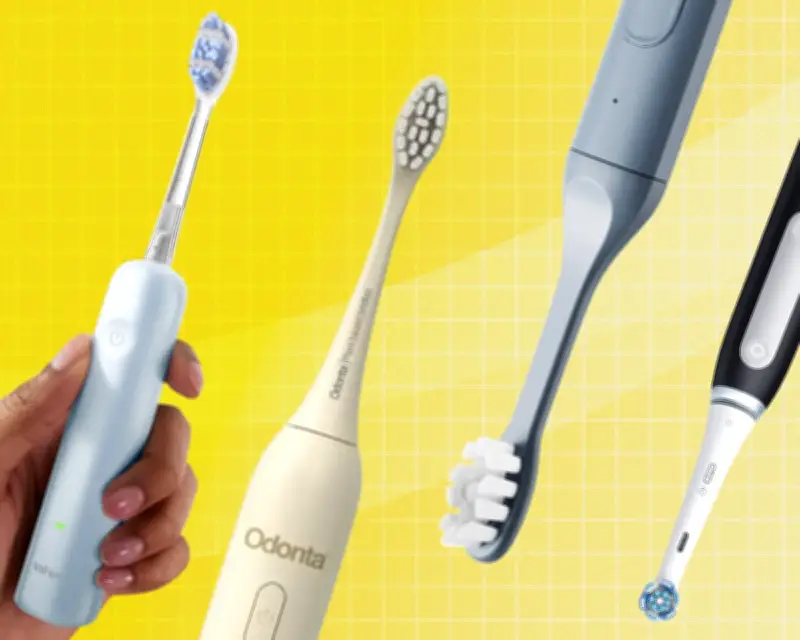
If you grew up using a conventional toothbrush – essentially a stick with bristles on the end – you may be surprised to learn just how long the electric toothbrush has been around. The first was designed in the late 1930s, but that model was a long way from the sleek, feature-packed and Bluetooth-enabled beasts you can buy today.
There are now dozens of ultra-advanced versions on the market, but which ones are worth your cash? To help answer that question, my teeth have become figurative guinea pigs. Over the past 18 months, I’ve put more than 20 electric toothbrushes from the likes of Oral-B, Philips, Suri, Ordo, Silk’n and Foreo through their paces to separate the best from the rest. Here are my conclusions.
At a glance
- Best electric toothbrush overall: Spotlight Sonic Pro £99.99 at Amazon
- Best value electric toothbrush: Icy Bear Next-Generation sonic toothbrush £64.99 at Amazon
- Best electric toothbrush for sustainability: Suri 2.0 £105 at Suri
- Best premium electric toothbrush: Philips Sonicare Smart 9400 £187.99 at Amazon
- Best oscillating toothbrush: Oral-B iO3 £75 at Amazon
Why you should trust me
As well as having the physical qualities required to test electric toothbrushes (my own teeth and a reliable toothpaste budget), I’ve been testing electronics – phones, drones and almost everything in between – for more than a decade.

Also – and I’ll put this delicately to prevent you from closing the page in justified disgust – as someone who has to wear a retainer every night after Invisalign treatment, the toothbrushes weren’t short of nasties to clean during testing. They’ve seen things, man.
How I tested
I doubt many people include the four minutes spent brushing their teeth as a highlight of even the most tedious day, so spare a thought for the months when it has become my life’s obsessive focus. Fortunately, and purely by chance, my first test coincided with a dentist’s visit in which I appeared to have undergone a Damascene conversion to good oral hygiene, so it did have its upside.
Anyway, the process was actually pretty simple: brush, brush and brush again, taking note of mouthfeel, grip, cleanliness, the features that appealed and those little things that made me irrationally grumpy. I used plaque-disclosing tablets, which turn your teeth a charming shade of pink and blue to reveal areas where plaque resides. Even the cheapest brushes did a good job of removing the blue, though, even if they didn’t feel as clean, so this test proved unhelpful.
Ultimately, while each of the 23 brushes I tested was leagues ahead of manual toothbrushes, I ordered them based on performance, features, feel, stamina and – perhaps most importantly, given how close the final results were – value for money.
A quick note on that: toothbrush recommended retail prices (RRPs) are often what you’d call “aspirational”. They’re frequently on offer, and even £500 models regularly go on sale for less than half price. It’s worth clicking through and checking what today’s price is on the off-chance.
The best electric toothbrushes in 2026
Best electric toothbrush overall: Spotlight Sonic Pro
What we love: A great all-rounder that gives a super clean at a fair price.
What we don’t love: The different modes aren’t labelled on the brush.
The Spotlight Sonic Pro is a great all-rounder, with excellent features and a price that doesn’t verge on ridiculous. Founded by two sibling dentists, Spotlight has only two electric toothbrushes for adults at the moment, and the Pro model tested here delivers on every metric that counts.
First of all, the Spotlight Sonic Pro performs an impressive clean. Its four modes range from 30,000 (gentle) to 50,000 (polish) brush strokes a minute (BPM). That makes it the second most powerful sonic brush I tested, and the two that delivered more have RRPs starting at £400. While not completely necessary for a healthy mouth, such speeds help provide that “fresh from the hygienist” feeling, even when your teeth are crying out for a thorough clean after a day mainlining soft drinks.

It also packs a pressure sensor to make sure you’re not brushing too hard and potentially damaging your gums, and there are four lights just below the head to show how far you are into your two-minute brushing cycle.
Flip the heads over and you’ll find a tongue cleaner, plus it comes with a handy travel case too. While this doesn’t charge the brush, the magnetic USB-C charging base is pretty compact, and a single charge can last up to 70 days, which is above average for an electric toothbrush. Even at the higher speeds I was using it at, it didn’t show any signs of slowing down during the testing period, so that feels accurate.
If you can do without the pressure sensor, progress lights, tongue cleaner and polish setting, you’re likely to be just as happy with the non-Pro version and can save a few quid.
Specifications: Type: sonic; Modes: four (gentle, clean, white and polish); Power: 50,000 BPM; Pressure sensor: yes; Battery life: up to 70 days; App: no; Replacement head cost: £22.50 for three.
Best value electric toothbrush: Icy Bear Next-Generation sonic toothbrush
What we love: The cheapest brush to come with a pressure sensor.
What we don’t love: No charging stand, leading to slightly awkward recharging.
There were three strong contenders in the £50-65 price bracket that I was considering for the best-value pick (the £59.99 Ordo Sonic+ and the Silk’n SonicSmile Plus (usually £50) were the others), but I ultimately chose the £65 Icy Bear because it was the only one to come with a pressure sensor. In fact, this was the cheapest toothbrush I reviewed that had one.
Oddly, the pressure sensor isn’t pitched as the main selling point, which is instead, rather confusingly, fingerprint recognition. This isn’t some kind of added dental security – it’s to prevent it from being activated in luggage without needing an extra case, and it works pretty well (with a perfectly angled edge and a lot of effort, I was able to turn it on without skin contact – but it’s not something you’ll do by accident).
Otherwise, it ticks all the boxes. The top of the handle glows white when in use, and flashes ominously if you’re pushing too hard, and there are a generous five brushing modes. At its maximum power, it hits a very respectable 40,000 BPM for a solid clean, too.
Specifications: Type: sonic; Modes: five (clean, whiten, polish, massage and sensitive); Power: 40,000 BPM; Pressure sensor: yes; Battery life: up to 45 days; App: no; Replacement head cost: £10.39 for two.
Best electric toothbrush for sustainability: Suri 2.0
What we love: By far the most sustainable electric toothbrush on the market.
What we don’t love: Somewhat lacking in the power department.
The original Suri toothbrush was not only solid, but also the only real choice for the climate-conscious in an industry that doesn’t seem to have taken much notice of the climate emergency. Unfortunately, it had a couple of issues that held it back: it lacked a pressure sensor, and the spring-pin charging system broke no fewer than three times on me. Both of these problems have been fixed in Suri 2.0, making it an easy recommendation.
In short, you no longer need to feel like you’re missing out by opting for a green option. The Suri 2.0’s slim design is lightweight and better suited for trips away than ever, thanks to a new travel lock and plant-based head cover.
Meanwhile, its unreliable spring-pin charger has been replaced by a wireless version (both in the bundled case and stand), and its new pressure sensor vibrates three times and pauses the brush if you push too hard.
All of this builds on what made the original so good: its eco-friendly credentials. The company has been working with ClimatePartner to offset 100% of its emissions (including transport and manufacturing), and it provides a postage-paid compostable bag to send the used heads back for recycling. These heads (three for £14.99, or cheaper on a subscription), incidentally, are cornstarch, with the bristles made of castor oil.
Specifications: Type: sonic; Modes: two (clean and polish); Power: 33,000 BPM; Pressure sensor: yes; Battery life: 1+ month; App: no; Replacement head cost: £14.99 for three.
Best premium electric toothbrush: Philips Sonicare Smart 9400
What we love: The most powerful brush tested, with a clever glass charger.
What we don’t love: Have you seen the price tag?
If you have a toothbrush budget most people could only dream of, then the Philips Sonicare Smart 9400 is the one to go for. I also tested the DiamondClean 9900, which retails for more than twice the 9400’s current price, but I actually prefer the way this one charges.
When I took the Sonicare 9400 out of the box, I thought they’d packed the wrong charger. It turns out that the handy rinse glass included in the package is how it charges. You rest the charging puck underneath it, and the toothbrush charges through the glass when not in use. What a time to be alive.
With up to 62,000 motions a minute, it’s the joint most powerful sonic brush I tested (tying with the aforementioned DiamondClean 9900), and you can really feel the results after use. It has four modes – clean (with three intensities), deep clean, gum health and white – feels comfortable in the hand, and comes with a charging case if you don’t want to take the magical glass charger on the road.
It also connects to a rather excellent app to track your brushing habits. Unlike with the DiamondClean 9900, where it’s the only way to cycle between modes, you don’t have to use it. But if you do, you’ll receive guidance on your brushing, showing the areas you’ve missed and giving you the option to spend a bit longer on them if needed. It can be connected with Apple Health for iPhone data nerds, and it’ll even automatically reorder brush heads for you if you want, so you’re never caught short.
Specifications: Type: sonic; Modes: four (clean, deep clean+, gum health and white+); Power: 62,000 BPM; Pressure sensor: yes; Battery life: up to 14 days; App: yes; Replacement head cost: from £17.19 for two.
Best oscillating toothbrush: Oral-B iO3
What we love: Well-priced brush with the best pressure sensor I tried.
What we don’t love: Pricey head replacements (even when discounted).
This oscillating toothbrush (which moves the bristles in a circular motion, rather than vibrating like most other brushes here – see the buying guide below for more information) isn’t technically the best one you can buy, as you can probably tell from the fact that Oral-B’s iO line goes all the way up to the iO10. But because they all use the same motor and brush, and thus offer similar performance, this is the one I recommend: it jettisons unnecessary extras (like a connected app and screen) in order to simply deliver the features you need for a great clean.
It boasts three modes – daily clean, sensitive and whiten – and its round heads are small enough to get into tight areas. Most importantly, its pressure sensor won’t only tell you when you’re applying too much pressure, but also when you’re applying too little, via an easy-to-understand white/green/red lighting system in a ring at the top of the handle.
While it has fewer modes than the higher-numbered iOs, it delivers the same dentist-fresh-feeling performance, while retailing for a fraction of their optimistic RRPs.
Specifications: Type: oscillating; Modes: three (daily clean, whitening and sensitive); Power: not disclosed; Pressure sensor: yes; Battery life: up to 18 days; App: no; Replacement head cost: £15 for two.
The best of the rest
Coulax C8
Best for: if money is tight. For less than £15, you get a toothbrush with five settings, up to 40,000 BPM and eight brush heads in the box. While my mouth didn’t feel as fresh as with more expensive models, it didn’t feel like a quarter of the performance for a quarter of the price. However, some customer reviews question its reliability. Price: £19.99 at Amazon.
Foreo Issa 4
Best for: sensitive teeth. Unlike every other toothbrush here, you use the Issa 4 like a manual brush, rubbing it against your teeth, rather than letting it glide over them. It lasts a full year on a single charge. The heads only need replacing once every six months. However, it doesn’t provide that squeaky clean feel that regular sonic or oscillating brushes provide. Price: from £62.30 at Boots.
Ordo Sonic Edge
Best for: recyclable heads on a budget. A bargain toothbrush from a well-known, reputable brand. It hits a decent 36,000 BPM, and the USB-C chargeable battery will go for six weeks. Ordo will recycle the heads free of charge. However, it’s extremely basic with no case, no pressure sensor, and a rounded base that makes it impossible to stand upright. Price: £15 at Argos.
Oral-B iO9
Best for: if money is no object. With a crazy £500 RRP, it offers seven cleaning modes, a colour screen, and built-in 3D teeth tracking. But it’s the definition of pricey overkill. Price: from £200 at Boots.
Silk’n SonicYou
Best for: battery life. The manufacturer suggests you’ll get up to 300 days’ use with it, if you use the sensitive setting twice a day. However, more powerful options are available. Price: from £60.60 at Amazon.
Whites Beaconsfield sonic LED toothbrush
Best for: whitening. It includes blue light whitening technology that can whiten teeth by an average of 2.5 shades in three days. However, the blue light hits battery life hard, giving only 15 days. Price: £99.99 at Whites Beaconsfield.
Philips One
Best for: travel. It’s cheap, cheerful, compact, and will last for 90 days with a single AAA battery. However, 13,000 movements a minute is extremely low for daily use. Price: from £15.99 at Superdrug.
What you need to know
Are electric toothbrushes better than manual ones?
Generally speaking, yes. Without them, “it’s harder to get the same result”, says Caitlin Miller, head of hygiene and therapy at Bupa Dental Care UK. “To get the same level of cleaning found with an electric toothbrush, you’d have to spend a lot longer than two minutes brushing with a manual.” The reasons are threefold: manual dexterity; that people are more likely to use their expensive electric device properly; and sheer power.
How do you use an electric toothbrush?
“You want to hold your toothbrush at a 45-degree angle – half on the gum, half on the tooth. You should just be holding it horizontally, sweeping across the tooth and gum margins,” says Miller. “You don’t move it up and down, you don’t need to move it round and round. That’s the beauty of the electric toothbrush: you can be pretty lazy with it, and it still does a good job.” But a common mistake is to press too hard, which is why pressure sensors are recommended.
How often do you need to charge an electric toothbrush?
This varies hugely between toothbrushes. The ones I tested had manufacturer-quoted battery lives of between 14 and 365 days. Many factors play into this, including power, connectivity and battery size. You may also want to charge more often than required, as the performance can diminish as the battery nears empty.
How often do you need to replace your toothbrush head?
Miller suggests you do this every three months – or earlier if it looks splayed or frayed – because its cleaning performance will suffer. Beyond an electric toothbrush, Miller stresses the importance of cleaning between the teeth, with a preference for interdental brushes, then floss, and finally water flossers.
The different types of electric toothbrush: oscillating vs sonic toothbrushes
There are two main types: oscillating and sonic. An oscillating toothbrush moves the bristles back and forth in a circular motion, while sonic brushes use vibrations to move the bristles in two directions to loosen plaque. A systematic review found a “small but clinically relevant advantage” for oscillating brushes, but personal preference should ultimately rule supreme.
What should I do with my old electric toothbrush?
If it still works, consider passing it on to a friend or family member. Don’t include used heads, but these can enjoy a second life scrubbing between tiles. For broken brushes, look for an e-waste bin or recycling points in shops such as Boots and Currys.