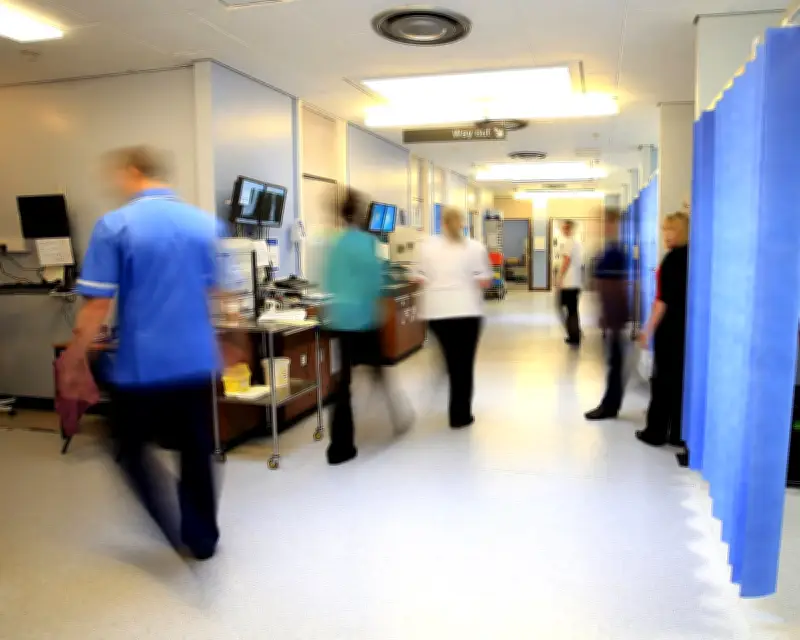
More than 1,300 patients a month in England are dying needlessly due to long waits in accident and emergency (A&E) departments, according to new figures that show a tenfold rise in a decade. The analysis by the Royal College of Emergency Medicine (RCEM) found that over 300 deaths were linked to long waits every week in 2025, up from just 30 a week in 2015.
RCEM Analysis Highlights Growing Crisis
Dr Ian Higginson, president of the RCEM, expressed deep concern over the escalating death toll. “We have to ask why this awful problem isn’t the subject of relentless focus and political conversation. The number of deaths linked to long stays in our emergency departments explicitly show the system is failing the patients it is meant to be caring for,” he said.
The RCEM based its excess death estimates on a study of more than 5 million NHS patients published in the Emergency Medicine Journal in 2021. That study found one excess death for every 72 patients who spent eight to 12 hours in A&E before being admitted to a bed. The risk of death began increasing after five hours and worsened with longer waiting times.

Using this methodology, the RCEM estimated there were 15,860 excess deaths in 2025 related to long waits. This figure was slightly lower than the 16,644 deaths recorded in 2024 but nearly ten times higher than the 1,657 deaths in 2015.
Medical Leaders Call for Systemic Solutions
Dr Higginson lamented the lack of effective solutions. “As an emergency doctor, it’s heartbreaking that patients arrive to our emergency departments in their time of need, and we can’t do our jobs properly because we are full. To make things worse we are being asked to focus on the least sick patients to try and marginally improve headline statistics, rather than on those who need our services the most,” he said.
He criticised the reliance on “recycled ideas that haven’t ever worked, performance data that doesn’t reflect reality, and a focus on perceived ‘quick fixes’.” Dr Higginson added: “Whilst we welcome the government’s stated commitment to eliminate corridor care, until we prioritise patients who experience long waits for admission, we will not get to the bottom of the whole issue.” He warned that without meaningful change, A&E departments in England would remain in constant distress and patients would continue to die unnecessarily.
Prof Nicola Ranger, general secretary and chief executive of the Royal College of Nursing, described the death toll as a “catastrophe” that had gone unchecked for too long. “To bring this to an end, we need system-wide, long-term, sustainable solutions. This must include urgent investment in hospital beds and the nursing workforce, while also improving access to primary care, investing in community nursing and unlocking capacity in social care,” she said. She added that every day without action was a failure with “devastating consequences” for patients.
Dr Vicky Price, president of the Society for Acute Medicine, called the deaths a source of “national shame” and noted that overcrowding in A&E departments was worsening.
Government Response
A spokesperson for the Department of Health and Social Care said it was unacceptable for patients to face long waits for emergency care, and expressed condolences to those who had lost loved ones. “While A&E waiting times are at their lowest level in half a decade, we know there is more to do. That is why we are investing over £215m in 40 new and expanded same-day emergency care and urgent treatment centres across England to reduce pressure on A&E,” the spokesperson said.
The government also stated it was deploying specialist teams to NHS trusts with the worst levels of corridor care in an effort to eradicate it.