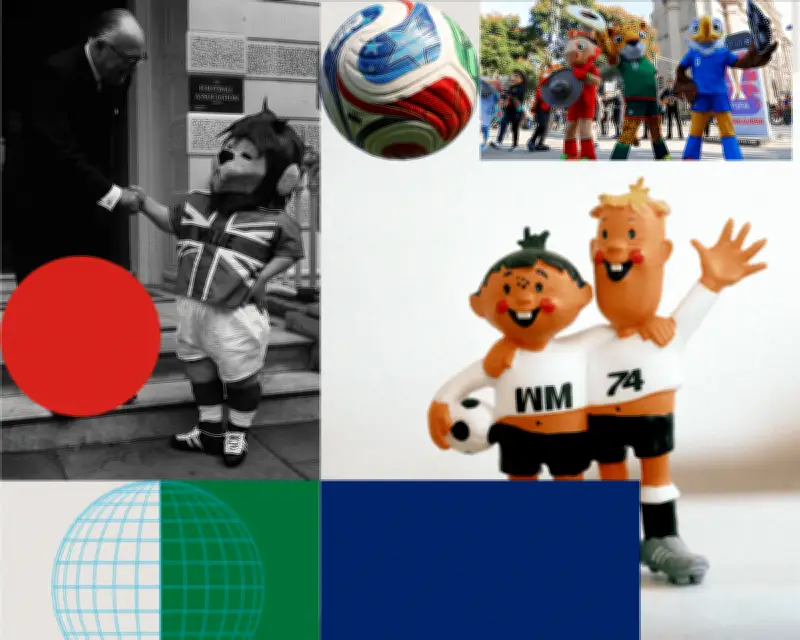
World Cup Willie marched onto the scene in 1966 with a spiky mane, bovver boy stance, bulbous brogues, and a Union Jack shirt. Created in a five-minute sketch by children's illustrator Reg Hoye, who later designed a red devil mascot for Manchester United, Willie was a marketing sensation. The first World Cup mascot appeared on bedspreads, beermats, ceramics, and cereal boxes.
The Decline of Mascot Creativity
Fast forward 60 years, and it is clear how far World Cup mascots have fallen since their peak in the 1970s and 1980s. The 2026 edition introduces Maple, a Canadian moose; Zayu, a Mexican jaguar; and Clutch, an American bald eagle. These three look like rejects from a straight-to-streaming DreamWorks sequel, continuing a 32-year trend of soulless, corporate, anthropomorphic animal slop.
According to FIFA's website, Maple "combines endless stories and unstoppable flair," though a moose goalkeeper with antlers might deter opponents. Clutch, we are told, "like all great midfielders, unites people wherever they go"—a claim that invites skepticism.

Early Successes and Missteps
While some argue mascots should appeal only to children, Willie's merchandise included branded Wee Willie Cigars, car ornaments, and lighters. Not every early mascot was a hit: Mexico 1970's Juanito—a boy in a sombrero—was unimaginative. However, the 1974 tournament delivered West German duo Tip and Tap, a big man/little man combo that sounded like Pep Guardiola's dream tactical plan. Argentina 1978's Gauchito sported a whip, neckerchief, and a cocksure stance, likely the last mascot to brandish a whip.
Spain 1982's Naranjito, a giant orange designed by graphic artists from Seville, proved that a simple concept done well is unbeatable. He starred in his own cartoon show, Fútbol en Acción, alongside pals Clementina (a mandarin), Citronio (a hapless lemon), and Imarchi (a robot). Alfredo Di Stéfano even appeared in segments offering football tips.
Controversy and Quirkiness
Mexico 1986's Pique, a green chilli pepper with a sombrero and elongated moustache, sparked controversy. A government official accused the design of playing to national stereotypes, saying, "It has nothing to do with the Mexico of today. It is as if a group of gringos picked out a symbol to depict Mexico." Co-creator Segundo Pérez defended it as "a bit like the sleepy Indian taking a siesta against a tree," which did little to diffuse the issue.
Italy 1990's Ciao avoided caricature by resembling a nightmare-inducing stick man. FIFA's website admits it is not "traditionally cuddly" and describes it as "the first and, to date, only mascot without a face." Created by Lucio Boscardin, the angular football-headed monstrosity was inspired by a traffic light, not an HP Lovecraft binge.
The Downward Spiral
After Ciao, originality waned. USA 1994's Striker, a dog chosen because dogs are popular pets in the US, set a dull template. France 1998's Footix, a big blue rooster, had charm and even fathered Ettie, the 2019 Women's World Cup mascot. Japan and South Korea 2002's alien trio Ato, Kaz, and Nik, named via a McDonald's vote, looked like disappointing Kinder Egg toys.
Germany 2006's Goleo VI, a lion, and his talking ball Pille, designed by the Jim Henson workshop, were a major dud. Goleo's realistic appearance and lack of trousers provoked public dismay, leading to the bankruptcy of the toy manufacturer that acquired their rights before the tournament began.
A stream of prosaic animals followed: South Africa 2010's leopard Zakumi, Brazil 2014's armadillo Fuleco, and Russia 2018's wolf Zabivaka, whose ski goggles gave a Winter Olympics vibe. Qatar 2022's La'eeb, a traditional Arab headdress, was cooler than local wildlife but recalled Casper the Friendly Ghost.
The 2026 Trio and Beyond
This year's trio—Maple, Zayu, and Clutch—continues the trend of blandness. Presumably, another triptych will appear for Morocco, Portugal, and Spain in 2030, but improvement seems unlikely. The era of unique and lovably quirky World Cup mascots went up in smoke long ago, just like one of Willie's World Cup cigars.