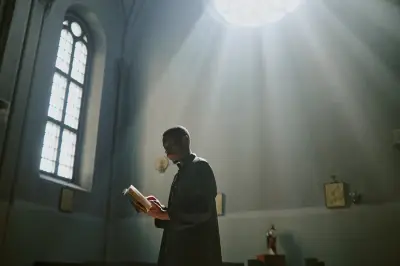
On one wall, a body falls calmly through a serene blue sky. On the opposite, splat, it has landed with a thud on the blood-spattered mud. You do not need to be an expert in image analysis to figure out what Georg Baselitz's final paintings are about: death was coming for him, and he knew it.
A Final Reckoning
Baselitz died in April aged 88 years old. He was one of the most influential, recognisable painters of his generation, and this body of work was his last. It is impossible to look at these paintings and drawings and not see them through the lens of death. They feel like a final attempt to come to terms with life and what it has meant, and a desperate, furious, chaotic reckoning with the end of it all.
He painted these final works from a wheeled office chair with a paintbrush on a stick, the canvas splayed out on the floor in front of him, his body not strong enough to stand like it used to. But they are still immediately recognisable as Baselitz works, filled with scrawled nude bodies, hung upside down to disorientate the viewer and subvert your gaze. It is just that now the chair has left mucky tracks across the paintings, evidence of the slow creep of decrepitude.

Figures of Love and Decay
The figures in these works, as usual, are mainly him and Elke, his wife and great muse. It is their sagging skin and brittle limbs scrawled on every work. As soon as you walk in and see that body falling through the sky you know exactly what Baselitz was dealing with: life is a trip, a rush, and then bang, you hit the dirt and you are dead. But the two paintings on either side are far less accepting of that fate. Instead of still and calm, the figures are flailing and thrashing, they have grown extra limbs, they are fighting against what is coming, they are panicked, manic.
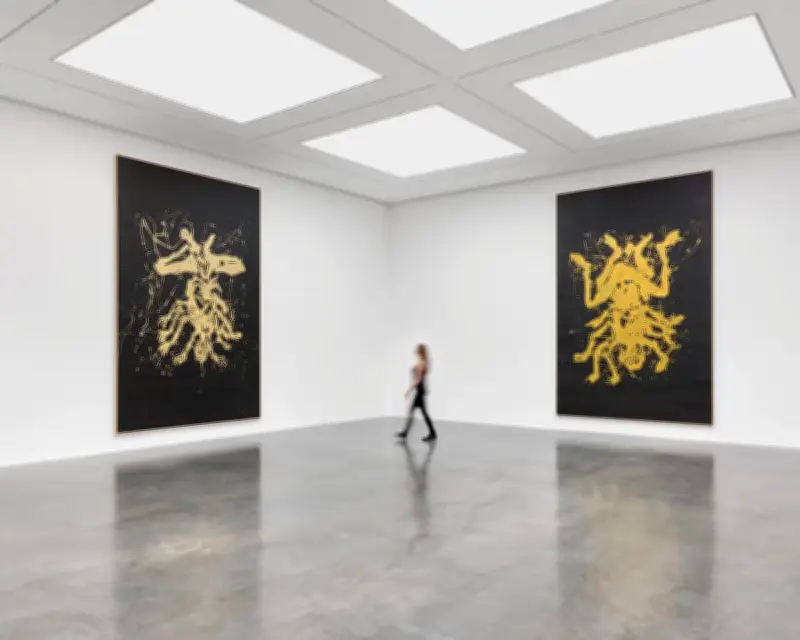
They look like spiders trying to climb out of a bathtub, and he repeats them over and over. The final gallery is filled with these enormous golden insectile forms wriggling on black canvases, falling into the abyss, trying desperately to escape. They are pretty horrifying things, bleak, angry, filled with fear.
Canonisation in Gold
Things are calmer in the room of golden canvases. Here, his and Elke's bodies are papery thin, fragile things. You can barely distinguish one from the other, they have almost become one figure now. For years, we have been watching Baselitz's figures become frailer and weaker – he was not a prolific painter, and he had his fair share of exhibitions, so we got to see him age over time, his lines become shakier, his figures become saggier and more gaunt. But this is another level, a sense of finality, of impending morbidity, of bodies broken beyond repair. With the gold canvases, it is like he is canonising himself and his wife, turning the figures into Byzantine religious icons. He knew, I guess, that artists outlive themselves through their work, and these are objects to be worshipped long after he is gone.
Eagles and Art History
Eagles appear here, as they have throughout his career, as symbols of his youth in shattered, half-destroyed postwar Germany. They too are frantic, a big messy explosion of jostling wings, crashing to the ground. 'Now that I am more or less at the end of my painting activity, I thought I should draw some kind of conclusion,' Baselitz said. The eagles, the bodies, the references to art history: this is him reaching for all of the touchstones of his life in art.
A Painfully Sad Goodbye
I have never been a huge Baselitz fan: I found the whole upside down painting thing an affectation and I would have happily fronted a campaign to have all his work shown the right way up so we can see what it is really about. I also think he churned out the same painting for decades. But this is brutally emotional stuff. How could you not be moved by a painter this important, trying to say goodbye and doing it so beautifully? He wanted a conclusion, well here it is, a full stop on a career. Or an exclamation point. What a painfully sad goodbye.
Georg Baselitz: Back Again is at White Cube Bermondsey, London from 10 June to 30 August.