A real estate agent is defending the use of AI-generated images that placed horses and stables in the backyard of a Brisbane home, as experts caution that the line between reality and fantasy in property listings is becoming increasingly blurred.
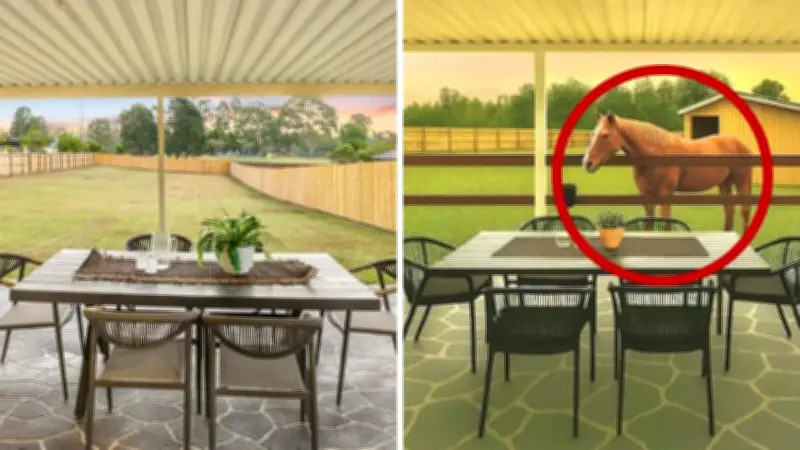
The hero image for the Riverhills listing by Saba Estate Agents showcased a picturesque scene with livestock peering over a wooden fence. However, photos deeper into the listing revealed that the backyard was actually empty. Agency director Helen Saba told news.com.au that before including the images, she contacted the local council to inquire about keeping horses on the property. The council indicated that horses might be allowed, subject to approval.
“The purpose of the image was to illustrate a potential lifestyle opportunity associated with the property based on the information we had obtained, rather than to suggest that horses were currently being kept on the site or that any approvals had already been granted,” Ms Saba said.

The listing also mentioned that the property had “genuine potential to accommodate horses,” though it did not include disclaimers about the enhanced images. This incident follows news.com.au's earlier report on other examples of agents using AI-enhanced images, including an apology from Queensland agency Ray White Aspley for using AI-generated content.
“We apologise for any confusion we may have caused with the use of AI photos on one of our Northgate listings,” Ray White Aspley Group CEO Robert Green said. “AI technology is new, and its use in real estate is uncharted territory. We want to be part of the conversation and help to navigate how AI can be used ethically within our industry.”
In another case, a listing by Ross Realty for a $1 million home in Western Australia left house hunters astonished. The ad featured a now-deleted image of a spacious lounge with a coffee table, but a local who inspected the home took a photo showing barely enough space for the sofas, which had been crammed inside.
What the Law Says About Altered Photos
There is no prohibition against agents editing real estate images, and it is generally permitted. However, under Australian Consumer Law, “property advertising cannot be misleading or deceptive,” according to Emily McMullan, principal solicitor at McMullan Lawyers. “And that covers the words, the images, the medium and the overall impression,” she told news.com.au. Each state also has its own legislation dictating professional rules of conduct for agents.
“The legal question is whether the image gives consumers a misleading impression of the property,” Ms McMullan said. “So that’s a test that enables courts to consider a spectrum — it might be less misleading or it might be more misleading — and that’s the way that consumer law has always worked.”
Some enhancement of photos might be “low-risk”, such as lighting changes and use of wide lenses, especially if clearly labelled. Ms McMullan said it would take time for the law to catch up with the rise of AI. “In the meantime, I doubt there’s significant pressure on agents not to do this. If agents start making these sort of changes and then competitors are doing it, then it’s likely they’re going to see this as a legitimate marketing strategy until proven otherwise.”
Her advice for buyers and renters is to “not commit to anything on the basis of images alone,” compare photos with listed dimensions, and directly ask agents if photos have been enhanced.
Meg Dalling from the Consumer Action Law Centre said the explosion of AI, combined with Australia’s “gaping lack of online protections,” means that every potential renter or homebuyer “must be ever vigilant.” “Unfortunately, we now all need to start from the point of scepticism, and if it looks too good to be true, it probably is,” Ms Dalling said. “Until Australia has effective laws in place to combat these types of digital scams, we are all vulnerable to being tricked and ripped off.”
In one state, regulators are already cracking down on rental ads. Last year, New South Wales introduced the Residential Tenancies (Protection of Personal Information) Amendment Bill, making it mandatory for agents to disclose if an image in a rental ad has been digitally altered in a way that could mislead renters.