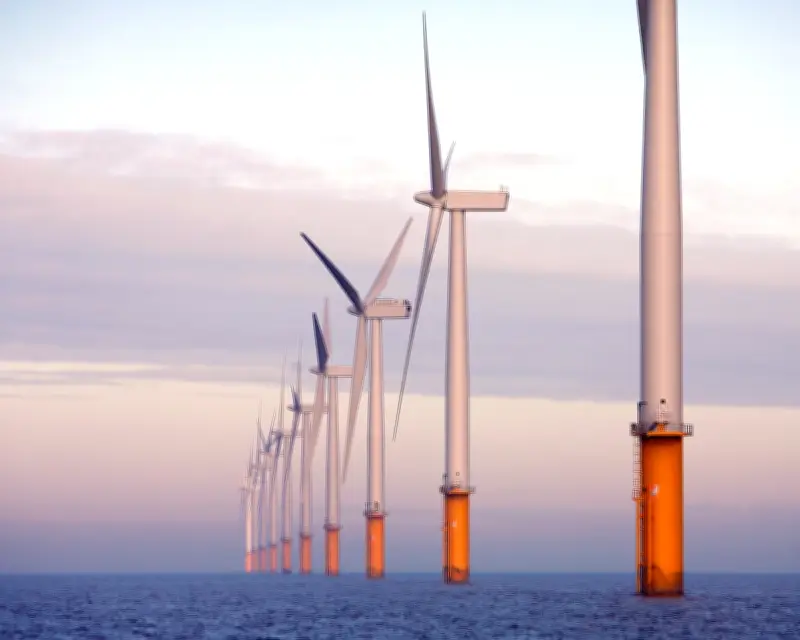
The UK's growing green economy is now worth more than £100 billion a year and supports over a million jobs, according to new research from CBI Economics, commissioned by the Energy and Climate Intelligence Unit (ECIU). The findings highlight the significant economic contribution of the net zero sector, which includes renewable energy, energy efficiency, and electric vehicles.
Net Zero Economy Boosts Jobs and Wages
The research reveals that the net zero economy provides employment for approximately 1.1 million people when direct jobs, supply chains, and related businesses are included. Workers in this sector earn an average salary of over £43,000 per year, which is about 11% higher than the national average of £39,000. The sector contributes £105 billion in gross value added (GVA), equivalent to nearly 4% of the UK's total economic output.
Investment Pipeline Reaches £455 Billion
An estimated £455 billion of potential investment in energy infrastructure is in the pipeline, driven by the government's target to decarbonise the UK's electricity system by 2030 and achieve net zero emissions by 2050. Each worker in the net zero economy generates nearly £120,000 annually for the wider economy, about one-and-a-half times the national average for value added.

Louise Hellem, chief economist for the CBI, stated: "Clean power and decarbonisation are already a significant and growing part of the UK's industrial base. Across energy, manufacturing, services and supply chains, the UK has the expertise to build on this strength and capture even greater commercial opportunities."
Small Businesses Driving Green Growth
Approximately 22,000 small businesses across the UK are engaged in activities related to reducing greenhouse gas emissions and boosting renewable energy. The report underscores that the net zero economy benefits all regions of the UK, contrary to critics who advocate for abandoning net zero targets.
However, some political parties, including the Conservatives and Reform UK, have proposed scrapping net zero targets and reducing support for renewables. Former Prime Minister Tony Blair has also called for an end to net zero and a shift back to fossil fuels.
Hellem warned that turning away from net zero would be economically harmful: "At a time when the UK must strengthen energy security and drive growth, the net zero economy is becoming central to the country's future competitiveness. The UK cannot afford to step back from an industry already contributing £100bn to the economy and with huge future growth potential."
Environmental and Political Reactions
Sandra Bell, climate campaigner at Friends of the Earth, criticised those opposing climate action: "The naysayers calling to dismantle climate action clearly don't want what's best for Britain or the millions of people struggling with the cost of living, otherwise they'd be pushing to reap these huge rewards."
Katie White, minister for climate, emphasised the importance of clean energy: "As Britain faces another fossil fuel shock, the only way to shield households and businesses is by accelerating electrification and clean, homegrown power that we control. What businesses and communities are delivering across the country is a great British success story."
White added: "Some would rather ignore the challenge of the climate crisis and leave our children to pick up the bill for climate change, but this government believes in a simple British principle – safeguarding our country for future generations."
Decline in North Sea Jobs
The report notes that jobs in the North Sea oil and gas sector have been declining for over a decade, with about 200,000 jobs lost since 2013, despite government support and favourable tax regimes. This contrasts with the growing net zero economy.
Tuesday's report is the fourth in a series by the ECIU and CBI Economics, which previously found that the net zero economy was growing three times faster than the rest of the UK's economy. The estimates only account for jobs and companies directly involved in the push for net zero. The wider green economy, including waste management, pollution remediation, water, and nature sectors, supports over 600,000 direct jobs, according to the Office for National Statistics.