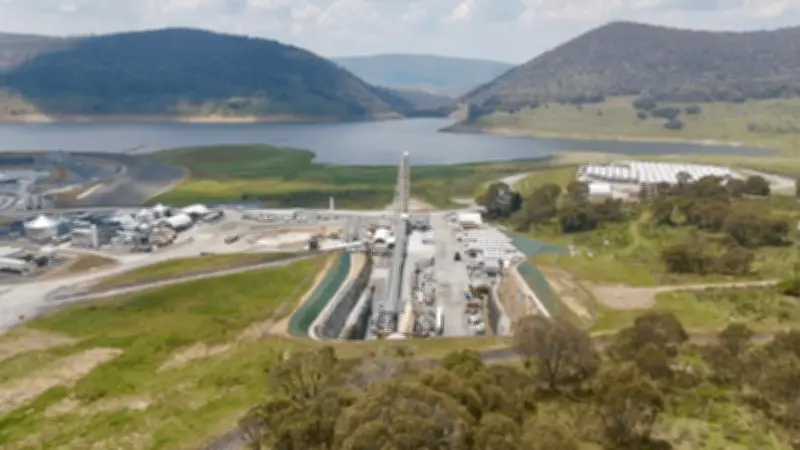
Snowy Hydro is likely to miss the 2028 deadline for completing its enormously overbudgeted Snowy Hydro 2.0 project, as pressure mounts on the government-owned venture. CEO Dennis Barnes conceded that the revised timeline looks increasingly unrealistic.
Massive Cost Overruns
Snowy Hydro 2.0 is now estimated to cost taxpayers approximately $42 billion—more than 20 times the $2 billion forecast by former prime minister Malcolm Turnbull in 2017. The project has been plagued by repeated delays, far exceeding its original 2021 launch date.
Speaking to The Australian on Thursday, Barnes admitted the end of 2028 target is uncertain. “The end of 2028 is not feeling comfortable,” he said. “That’s probably that.”

Contractor Criticism
Barnes also took aim at the project’s Italian contractor, Webuild, which has labelled its performance in Australia as “fantastic” despite overseeing major issues. “They’ve been a bit disappointing,” Barnes said. “There’s been lots of things that they’ve had to deal with. They are pretty engaged with us. But it’s been challenging for them and it’s been challenging for us. Could they have done a better job? Probably.”
In 2023, the Labor government renegotiated the contract with Webuild from a fixed-price model to a cost-plus arrangement, allowing the contractor to be reimbursed for certain expenses. Former Snowy Hydro boss Paul Broad blamed Energy Minister Chris Bowen for the cost blowouts stemming from that decision.
“When (Mr Bowen) got there (during) the back end of COVID, his then chair of Snowy Hydro went off to Italy and renegotiated the contract away from an incentive-based contract to a cost-plus contract,” Broad told The Kenny Report. “So in my view, he created the problem rather than solved it. He created a problem that we're going to see now when a cost goes through the roof.”
Geological and Transparency Issues
Part of the difficulty involves the 29km feeder tunnel, which will be the largest of its kind globally. The Snowy Mountains region features complex rock formations, faults, fissures, and varying rock density, adding pressure to the project.
Professor Bruce Mountain, head of the Victoria Energy Policy Centre at Victoria University, has called for a Royal Commission and criticized Bowen for a lack of transparency. “Bowen, when Labor came to government, promised to do a review that would be independent and open and he would communicate the results of the investigation into Snowy. That simply did not happen,” Mountain told SkyNews.com.au in April.
“Successive governments have backed Snowy Hydro. They should have, right from the very beginning, realised that they needed an independent assessment of this.”
Industry Reputation at Risk
Bede Noonan, chief executive of Acciona Australia—which is building the HumeLink transmission line connecting Snowy Hydro 2.0 to the power grid—warned that the massive cost overruns are damaging the entire construction industry’s reputation. Noonan said the blowout could affect future construction jobs.
“I’m concerned that that project is causing industry-wide reputational damage, putting aside just the ridiculous cost that we’re now seeing,” Noonan told The Australian. “I care about the jobs and costs of projects. We all need to really care more deeply about the future of the industry, the impacts to the industry and its reputation and how we conduct ourselves.”
Despite the widely reported cost blowouts, Labor still valued the project at $8.3 billion in last month’s budget. Earlier this year, Barnes said the project was about 70 percent complete. Once finished, the renewables project is expected to deliver over 2,200 megawatts of electricity to the national grid.