OpenAI has made a $1.4 trillion move toward going public, just one week after rival Anthropic filed for its own IPO, sparking warnings for Australian superannuation holders. The global economy has been rocked by another bombshell from the AI industry, with flow-on effects expected for Aussie super funds.
CommSec Overwhelmed by Demand
The AI frenzy has attracted so much interest in Australia that Commonwealth Bank's trading platform CommSec struggled to keep up with demand, despite opening on the King's Birthday public holiday to take calls in a highly unusual move. Those looking to participate in the SpaceX IPO on Friday faced wait times of up to an hour to speak to a representative.
Now the frenzy looks set to intensify as ChatGPT-maker OpenAI this morning took the first step toward going public, one week after arch rival Anthropic announced its own filing. Both companies are seeking massive amounts of cash to expand their AI capabilities.

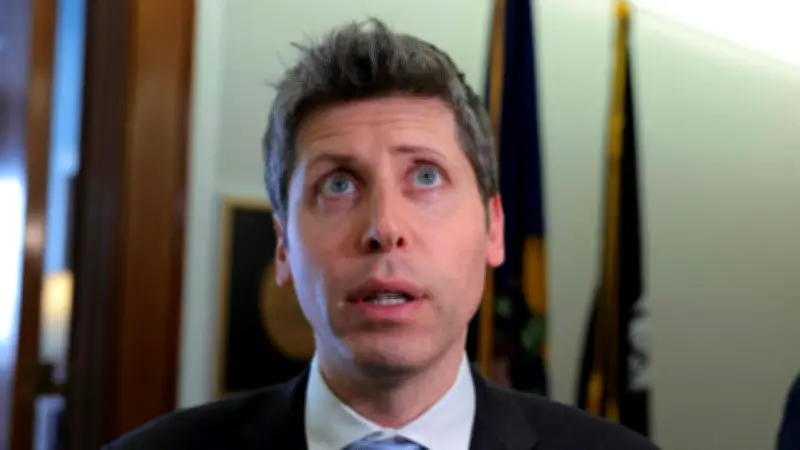
In a social media post, the Sam Altman-led company said it had confidentially submitted an S-1 registration statement to US securities regulators but had "not decided on timing yet" for any potential debut. OpenAI's move follows a confidential filing by Anthropic, the maker of the Claude chatbot, which announced last Monday that it had taken the same step.
"It may be a while because there are things we want to do that are likely easier as a private company," OpenAI said, while noting the filing gives it "the option to go public sooner if that ends up being best."
Massive Capital Needs Drive IPOs
Training and running cutting-edge AI models requires billions of dollars in computing infrastructure, and both OpenAI and Anthropic have been spending heavily to secure data centre capacity and chips amid fierce competition to lead the industry. Both companies have also raised record amounts of private investment to meet their ambitions, a process that may have reached its limits, forcing a turn to Wall Street for still more funding.
But going public requires making a company's internal finances public, a process that both loss-making companies will want to delay for as long as possible, explaining their confidential filings. OpenAI acknowledged the decision involved "a complicated set of tradeoffs" but said the filing preserves its flexibility.
Anthropic, valued at US$965 billion ($1.4 trillion) following a $65 billion ($92 billion) fundraising round, has positioned itself as a safety-focused rival to OpenAI in the generative AI race. OpenAI was valued at US$852 billion ($1.2 trillion) in March, putting it behind Anthropic by that measure heading into what analysts say could be a landmark period for AI listings.
Both companies appear set to follow Elon Musk's SpaceX to Wall Street. SpaceX, which absorbed Musk's xAI lab, could see shares begin trading as early as Friday, targeting a valuation of roughly US$1.75 trillion ($2.5 trillion) in what would be the largest IPO in history.
OpenAI said it decided to get ahead of the news, predicting the document would surface regardless. "We expect it to leak so we're just announcing it," the company said.
Chaos in Australia as CommSec Overwhelmed
The moves from major AI players have already sparked chaos Down Under as Commonwealth Bank's trading platform CommSec scrambles to keep up with interest in the SpaceX IPO on Friday. In a highly unusual move, CommSec was taking calls throughout the King's Birthday long weekend to field questions about the Australian allocation of shares in the largest initial public offering in history.
The Nightly reported that CommSec's call centre was slammed with calls on the public holiday and clients had to wait almost an hour to get through. "We are receiving a very high volume of applications at the moment," a call centre operator told The Nightly after a 56-minute wait on Monday.

High-profile fund manager Geoff Wilson said it was ironic Australians were rushing to buy a foreign company when the federal government was about to make share investing more expensive. "At the same time the Australian government is proposing the capital gains tax changes that will discourage investment in Australian growth companies, Australians are lining up to invest billions into one of America's success stories," he told The Nightly. "Capital is mobile. If you make Australia less competitive, capital won't disappear. It will simply go elsewhere, which is what is clearly occurring with SpaceX."
As SpaceX doesn't plan on paying dividends, Aussie SpaceX investors are likely to be caught by increases to capital gains tax introduced in this year's Budget.
US Gearing Up for a New Generation of Billionaires
If the excitement in Australia is high, it has hit another level in the US where many early SpaceX investors could potentially become billionaires overnight on Friday. The New York Post reports that Mr Musk's company has so far been held by flashy tech bros and his private investors. If the IPO on Friday is successful, it could make them billionaires as retail investors could potentially make the value of their shares skyrocket.
The rapper 2 Chainz has said he was an early SpaceX investor, as has short-lived White House comms director and hedge funder Anthony Scaramucci. The boom could have major ripple effects. "Just look at the price of Knicks tickets," one top investor told the Post. Ticket prices for game three of the NBA finals, the first to be hosted by the New York Knicks since 1999, are eye-wateringly expensive. Two VIP seats, normally reserved for celebrities, were auctioned for $1 million.
The new big money could flow to art, real estate and high-end toys like planes and boats, including "the housing markets in San Francisco and, to a lesser extent, LA, as well as Miami at the high-end for the ultra rich," a source said. A top art insider told us that even before the IPO: "We've already seen the art markets blow up in the last few weeks — there is a lot of liquidity in the system because of tech companies, and the three giant IPOs back-to-back," meaning SpaceX, OpenAI and Anthropic. "You can't bet against the fact that there's going to be newly minted people with liquidity."
A high-net-worth insider said: "The airplane market has gone crazy in the last two months, the boat market has gone crazy, the art market has exploded again. This is way beyond luxury goods. What's relevant now are these large ticket items: houses, boats, planes. Prices in San Francisco are setting records every day, they're going through the roof."
The Post's finance expert Charles Gasparino, however, warned that small investors with money in index funds could be "left holding the bag" in the case of a future correction.
Big Risk for Aussie Supers
Gasparino's warning has been echoed here in Australia as the major AI players prepare to go public. Australian participation in the SpaceX IPO is expected to run into the low billions of dollars. Experts warn we're entering "dangerous, dangerous territory" as the potential concentration of wealth could impact 17 million Aussies — effectively the entire super-holding population of Australia.
Every Aussie who has super, ETFs or both could be impacted, because SpaceX – and its enormously risky strategy that saw it lose US$5 billion just last year – could soon find its way onto the world's biggest index funds, which almost all super funds have some exposure to.
Anthropic made a secret $2.5 trillion move for an initial public offering, as Silicon Valley AI companies look to raise the enormous sums needed to fuel the sector's rapid expansion. An IPO is the process through which a private company raises capital by selling shares of its stock to the public, in this case on Wall St, for the first time. The company is now expected to close above US$1.8 trillion ($2.5 trillion) in market cap on its first day of trading.
One of the major concerns about these AI giants is how much money they are pouring into the tech and whether it is all one big bubble that is about to burst. If the listings go ahead, hundreds of millions of investors around the world will be exposed to the risk as index funds — which track the performance of the biggest companies and are a big part of super funds — will be heavily skewed towards these risky AI companies rather than other types of businesses.
A recent rule change means that index providers including FTSE Russell, Nasdaq and CRSP will allow mega floats such as SpaceX a much faster entry into benchmark indices than in the past. Only three months ago, these companies would have had to pass strict hurdles about how much profit they made and wait out a three-month period before being allowed on the indexes. But the rules have changed just as SpaceX, Anthropic and OpenAI look to enter the public market.
SpaceX will be eligible for inclusion in the Russell 2000 index within just five days and in the Nasdaq indices within just over a fortnight. S&P Dow Jones, the world's biggest and best-known index company, will reveal its new rules on Monday. It's feared they will cave into the pressure set by the other index providers.
The AFR's Chanticleer reported that the rule changes mean the "hundreds of trillions of dollars tracking indices through passive strategies – including the world's most popular exchange-traded funds – are going to be required to buy shares in companies such as SpaceX almost as soon as it lists, in what's certain to be a blaze of bubbly hype." "That includes tens of millions of Australians, both retail investors who hold ETFs directly and super fund members, whose funds are increasingly reliant on passive or passive-like strategies across their equity portfolios."
The concentration of AI companies on the big indexes would be enormous if all three major players joined. The Bank of America predicts that when SpaceX, Anthropic and OpenAI list, about 48 per cent of the S&P 500 will be weighted to just 13 AI-related companies — an industrial monopoly of the market not seen since the railroad boom of the late 1800s. Anton Eser, the global chief investment officer of Dutch funds management giant Robeco, told the AFR: "The concentration risk that exists in equity markets hasn't been this great in 100 years. We are in dangerous, dangerous territory."