Airlines in the Asia-Pacific region are forecast to experience a 35 per cent decline in profits per passenger this year, as they grapple with soaring fuel costs and currency pressures.
IATA Forecast Highlights
Delivered by the International Air Transport Association (IATA) overnight Australian time, the analysis points to a 70 per cent increase in global jet fuel prices and weakening Asian currencies against the US dollar. The association forecasts profit per passenger across all carriers in the Asia-Pacific region will fall from $US5.30 in 2025 to $US3.40 this year – a 35.9 per cent drop. Net margins are expected to slump by 40 per cent.
“It is a tough year for all airlines, but especially for those whose balance sheets have not yet recovered from Covid-19,” IATA Director-General Willie Walsh said on Sunday in Brazil. He added, “Under the circumstances, that shows resilience … but it won’t even buy you a hot dog at most of the FIFA World Cup venues, and it does not leave much of a buffer, should other costs or taxes start rising.”

Impact on Australian Carriers
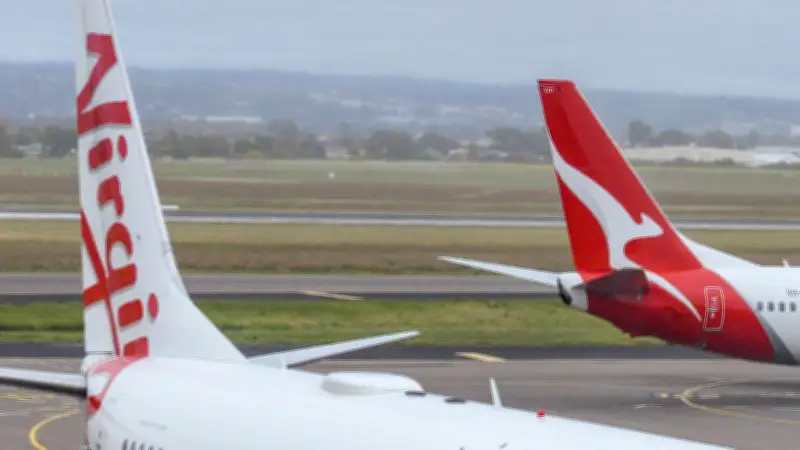
In mid-April, jet fuel prices had already climbed by 125 per cent of pre-Iran war levels, forcing Qantas and Virgin Australia to hike ticket prices and reduce flight numbers. Both airlines have been contacted for comment and referred to their latest company announcements.
Qantas told the ASX in mid-April that it had adjusted international routes, cut domestic flights by 5 per cent, and raised fares in response to surging oil prices. The airline noted strong demand for European travel as passengers avoided the volatile Middle East, leading Qantas to divert aircraft from US and domestic routes to increase flights to Paris and Rome. Qantas’ share price is down 11.5 per cent year-to-date but has rebounded 8.6 per cent over the past month.
On April 15, Virgin Australia reported similar measures, raising ticket prices and reducing flights as jet fuel costs doubled across March and April. “Virgin Australia’s fuel suppliers continue to provide assurances regarding the near-term supply of aviation fuel to support its operations well into May 2026,” the company said. Virgin’s share price has fallen 25.4 per cent in 2026 but recovered 14.5 per cent in the last month.
Global Context
Speaking at IATA’s AGM in Rio de Janeiro on Sunday, Walsh said the outlook for airlines had worsened. “War-related disruptions in the Middle East and rising fuel costs have shifted the outlook for airlines to the worse. Globally, airlines are expected to see profitability halve compared to 2025. Profits will shrink from $US45 billion in 2025 to $US23 billion this year, and margins will shrink from 4.2 per cent to 2 per cent.”
For Asia-Pacific, IATA cited the region’s heavy reliance on crude oil imports from the Gulf as a key pressure on refineries. “Some Asia-Pacific carriers are benefiting from shifting traffic flows linked to the Middle East conflict, particularly on Europe-Asia routes,” Walsh noted. “Cost pressures are amplified by the depreciation of several Asian currencies, which raises the local currency cost of US dollar-denominated expenses, most notably fuel.”
Last month, the Australian government secured 100 million litres of jet fuel from China, scheduled to arrive from early June, to help alleviate supply concerns.