There is something magical about the long evenings in June, the warmth and the way the setting sun casts long shadows across the fields. The extra hours are much-needed though as there is plenty to do.
We are in the run-up to harvest in July, so if the weather is dry we walk up and down the seed crop tramlines, pulling out (rouging) unwanted wild oats, brome and blackgrass. They drop seeds that could contaminate not only our ground, but potentially someone else's. Strict numbers govern how many of such plants are allowed per hectare in a seed crop, and independent inspectors check the results. Government officials in the Animal and Plant Health Agency will even walk the higher quality seed crops.
On wetter days we head undercover and clean the grain stores, leaving "bait traps" to check for insect pests such as grain weevils and mites. If they are present, we go back in with our brush and vacuum.

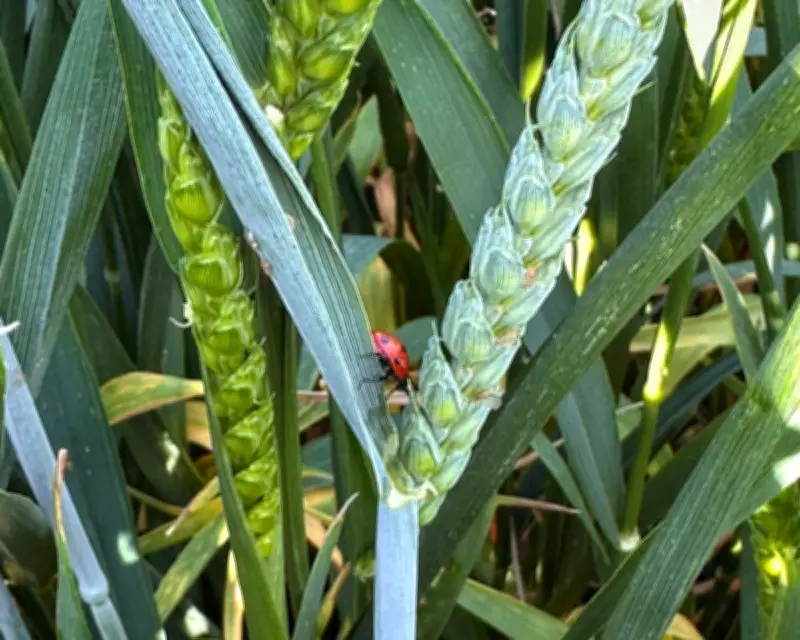
The recent very dry spell has brought on the wildflower margins, a mix of cornflowers, poppies, corn cockles, moon daisies, phacelias and others. Their colours are outstanding and a magnet for bees and butterflies, but they are also a habitat for my aphid pest controllers – mainly ladybirds, but also parasitic wasps and hoverflies. Surrounding my fields, these natural predators are the unsung heroes of the farm, working their way several hundred metres into the crops such as wheat and oilseed rape, vastly reducing the need for chemical control.
Soon we will be making hay. Demand is strong after last year's drought-hit hay yields, but we do not compromise by making haylage or silage in April or May as I cannot abide plastic wrapping in the countryside, and cutting early harms ground-nesting birds, especially as we cut from the inside of the field and work outwards. The problem with hay is the changing, unpredictable climate. Patience can be tested when a "seven-day heatwave" becomes five days, or three, or dry weather is followed by torrential downpours.
It is not just the evenings that can be glorious here, the dawn chorus is often deafening and begins well before 5am. I know from the Merlin app and a monthly RSPB walk we host that birdlife is thriving. On the RSPB's first visit, it notched up 36 species, including six separate warblers.