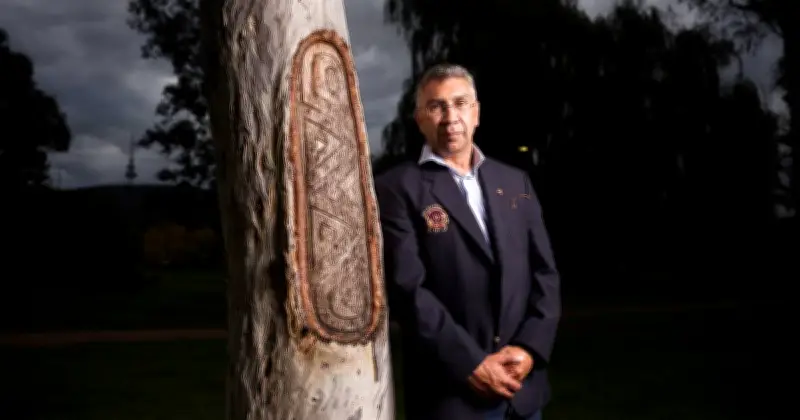
The ACT government "acts to undermine the survival" of the Ngambri people and has given pre-eminence to the Ngunnawal, a barrister has argued in a long-running dispute.
Ngambri custodians Paul Girrawah House and Leah House have taken the territory government back to the ACT Supreme Court. They allege it has not upheld a settlement agreement and violated their human rights by failing to recognise the Ngambri people as traditional owners of the Canberra area.
In April 2023, the ACT government agreed to undertake a "comprehensive review" of its Indigenous recognition policies and update its Indigenous protocols. Members of the Ngambri first filed a claim in 2022 against the government's "one-tribe policy", which states Ngunnawal people are the traditional custodians. The policy "acknowledges that other people and families also have a traditional connection to the lands of the ACT and region and we respect this connection to country."

Giving evidence on Tuesday, June 9, Mr House said: "We are not others, we are a distinct people." Mr House told the court four generations of his family were present to watch proceedings and 400 to 500 people in the ACT area identified as Ngambri. He said the civil case had been settled "reluctantly" in 2023 and claimed the territory had not consulted Ngambri representatives since the deal was struck.
Barrister Sarala Fitzgerald SC, representing the Ngambri applicants, argued there had been a "complete lack of action" by the ACT since 2023. Ms Fitzgerald said the ACT government had stated it would not progress a review until after any native title processes. Both Mr House and a group of Ngunnawal people have flagged separate plans to lodge native title claims on the ACT.
On Tuesday, the court heard native title applications were a "notoriously lengthy process" and generally took about 20 years to finalise. "The deed was signed three years ago and the defendant essentially admits that the undertakings have not been completed," Ms Fitzgerald said.
Ms Fitzgerald argued the ACT government had discouraged the Commonwealth's "long-standing practice of recognising both Ngunnawal and Ngambri people". She said this had resulted in "decreased recognitions of the Ngambri" federally. The barrister claimed that for two decades the ACT government had "insisted there is only one tribe" and treated the Ngambri people as "an illegitimate splinter group". "The plaintiffs are entitled to have their Ngambri identity respected on an equal basis."
Stephen Lloyd SC, representing the ACT, argued the government was "prepared to undertake a comprehensive review" but only after "native title claims come to fruition". "Once that is resolved ... the legislation should ultimately come to embody language found in the final protocol," Mr Lloyd said. "My client has changed the language it uses in all kinds of ways to reflect the interim protocol, sometimes in signage, sometimes in letters and footnotes. We have recognised that there is a group called the Ngambri people who have self-determined that they are traditional custodians of the land."
The hearing before Justice David Mossop continues.