Reform is hard. As the Albanese government faces trenchant attacks on its recent federal budget, it is reasonable to ask whether Australians truly want reform. From front pages to Facebook, in parliament and opinion polls, the mood seems so sour that far-right demagogue Pauline Hanson is being canvassed as a possible prime minister in 2028. After a quieter first term, during which he was criticized for lacking boldness, Prime Minister Anthony Albanese may wonder if bigger moves in Labor's second term are worth it. For several reasons, the answer is yes.
Governments Learn by Doing
All new governments learn by doing. They must match ambition with capacity and capability, or things can go awry. If the first term works well, more political capital is earned at the second election. That capital can be spent on a more ambitious agenda by experienced ministers. The budget's tax reform package timing was therefore likely right. Labor won a second election with a large seat buffer. The government can lose many seats and still win the 2028 election. It has two years to let voters digest the tax changes.
The Noise Is Often Not the Whole Story
It is hard to gauge how reform is received, especially when vested interests are challenged. The loudest budget attacks come from mainstream commercial media, shaped by plutocratic owners and fueled by rage-farming. Asymmetries in reporting are striking. For example, the Australian Financial Review led on May 27 with 'Rethink tax moves, tech chiefs urge,' one of four critical stories. Yet the same day it reported JWS Research's post-budget analysis showing net positive support for all key measures, including capital gains tax changes. That story was buried on page 4 with a mealy-mouthed headline. Similarly, the Sydney Morning Herald reported on May 28 that 'Nine in 10 under 30 to be better off due to tax changes,' a big story placed on page 11.

Broken Promises or Pragmatism?
A righteous streak in commentary focuses on alleged 'broken promises' and 'untrustworthiness' over changed stances on CGT and negative gearing. Yet experienced hands struggle to name a prime minister who hasn't changed stance on something, often going on to win elections. Healthy debate should consider whether changes are in the national interest, not rush to condemnation.
The Polling Should, but Doesn't Always, Help
Reputable polls can guide during high political noise, but they can be wrong, as when Liberal Scott Morrison won the 2019 election against poll predictions. Polls can become the story, as with One Nation's apparent rise in 2026. This is problematic due to herd behavior, as noted by astrophysicist Brian Schmidt. Some pollsters, like Redbridge Group, get enormous coverage for the 'rise of One Nation' narrative, while others like Essential Poll, which notes that voters choosing One Nation now may not do so at election time, get less attention. Essential's post-budget survey found two-thirds of voters supported government action to rebalance tax rates on wages versus investment earnings. Executive director Peter Lewis says: 'Told well it has the potential to connect with those moving to the political fringes because they don't believe the system works for them anymore.'
Governments Have Been Here Before and Survived
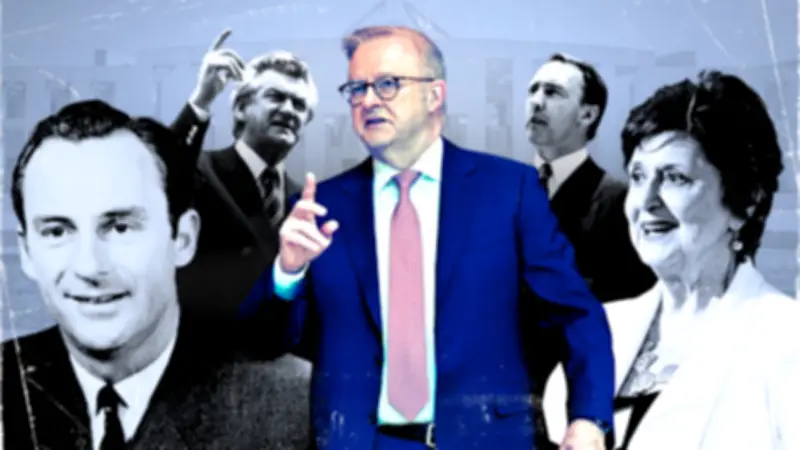
Significant reforms always provoke a reaction. Whitlam government health minister Bill Hayden received death threats when fighting for Medibank. There were demonstrations against Hawke government minister Susan Ryan over the Sex Discrimination Act. That's politics. Is the Albanese government doing enough or too much? The rapturous applause Treasurer Jim Chalmers received from caucus after the 2026 budget shows MPs are thrilled the government is doing bigger things. Many voters are likely quietly relieved. They elected Labor to do Labor things and will punish the government if it doesn't. Like Hayden, Ryan, Hawke, and Keating, Albanese and Chalmers just have to keep fighting their policy corner and prevail.